
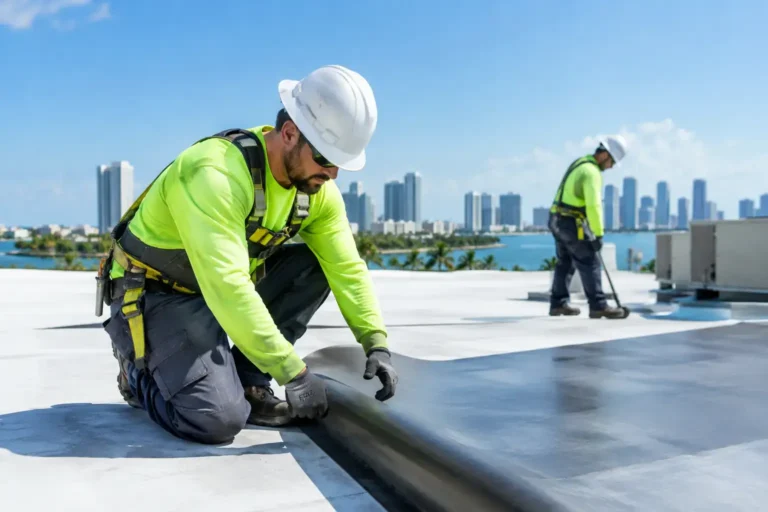
A commercial roof rarely fails at a convenient time. A leak above an office suite, retail floor, warehouse inventory area, or mechanical room can interrupt operations quickly and create costs well beyond the roof itself. Miami-Dade commercial reroofing is not simply a maintenance expense. When planned correctly, it is a practical investment in property protection, tenant confidence, code compliance, and the long-term performance of the building.
South Florida roofs work hard. Intense sun, heavy rain, wind-driven storms, humidity, standing water, and salt exposure near the coast can shorten the service life of materials that might perform well elsewhere. Property owners and managers need a reroofing plan that addresses those local conditions while keeping the project organized, safe, and on schedule.
Know When Reroofing Is the Right Move
A repair can be the responsible choice when damage is isolated and the existing roof system still has useful life remaining. Replacing a few damaged areas, repairing flashing, or correcting a small drainage issue may prevent a minor concern from becoming a major disruption.
However, repeated leaks in different locations, widespread blistering or cracking, deteriorated seams, soft decking, persistent ponding water, or frequent repair invoices are signs that the conversation should shift from repair to replacement. A roof can look acceptable from the ground and still hold moisture beneath the surface. That hidden moisture can affect insulation, decking, and interior finishes over time.
Before committing to a full reroof, a thorough evaluation should identify the roof’s condition, previous roof layers, drainage performance, penetrations, edge details, and any damage around rooftop equipment. The goal is not to recommend more work than necessary. It is to understand the true condition of the assembly so the owner can make a sound decision based on risk, remaining service life, and budget.
Repairs and Replacement Serve Different Purposes
Repairs are generally best for a roof with a limited, identifiable issue. They can extend service life and protect the property while an owner plans a larger capital project. Reroofing is often the better value when repair needs are recurring, the existing system has reached the end of its expected life, or the roof no longer provides reliable weather protection.
The least expensive proposal is not always the lowest-cost decision. Repeated emergency repairs, tenant complaints, damaged inventory, and business interruptions can add up quickly. A properly scoped replacement provides a clearer path forward, with defined materials, installation details, inspections, and warranty expectations.
Build the Scope Around the Building
No two commercial roofs have the same needs. A small professional office, a multi-tenant retail center, a condominium building, and an industrial warehouse may all require different systems, details, and installation schedules. The right scope begins with how the building is used, not with a one-size-fits-all product recommendation.
Roof access, HVAC equipment, skylights, drains, parapet walls, exhaust vents, solar equipment, and future maintenance needs all affect the work. If electrical equipment or mechanical units must be disconnected, raised, or protected, that coordination should be established before the project starts. Clear planning reduces unexpected delays once crews are on the roof.
A complete commercial reroofing scope should also address the roof deck. If damaged or deteriorated decking is found during removal, it must be repaired before the new system is installed. Allowing for this possibility in the project plan helps avoid confusion and keeps the work moving safely.
Drainage Deserves Close Attention
Water is supposed to leave the roof quickly and predictably. When it does not, standing water can place extra stress on roofing materials, create leakage risks, and reveal larger design or maintenance issues. Clogged drains may be the problem, but low areas, damaged scuppers, undersized drainage, or poor slope can also contribute.
Reroofing is an ideal time to improve drainage details rather than covering an existing problem. Depending on the building, that may mean correcting low spots, adding tapered insulation, repairing drains, or improving edge and flashing conditions. The right solution depends on the roof structure and how water moves during heavy rain.
Select Materials for South Florida Conditions
Commercial roofing materials should be chosen for performance, compatibility, and the building’s needs. Modified bitumen, single-ply systems, metal roofing, and coating solutions can each be appropriate in certain applications. Material selection should never be based on appearance or initial cost alone.
A low-slope roof may benefit from a system designed to manage ponding water and provide dependable seam performance. A metal roof may offer long-term durability for the right structure, but it requires careful attention to fastening, flashing, and expansion details. Roof coatings can be useful when an existing system is a suitable candidate, but they are not a substitute for replacement when the roof assembly has significant moisture damage or failed components.
Miami-Dade projects also require attention to current permitting, wind-resistance requirements, approved product assemblies, and applicable building codes. A qualified contractor should explain what applies to the property and use materials and installation methods that support the required approvals. This is especially important because a roof system performs as an assembly. Quality materials cannot overcome weak installation details.
Plan the Work Around Operations
Commercial reroofing affects more than the roof. It can involve noise, restricted parking or loading access, temporary odors, equipment movement, and safety controls around the building. For occupied properties, communication is as important as construction skill.
A dependable project plan identifies work areas, delivery locations, access routes, daily cleanup expectations, and points of contact before crews arrive. Tenants and employees should know when work will occur, which entrances may be affected, and who to contact if an issue arises. Retail and hospitality properties may need work staged outside peak hours. Medical, educational, and food-service facilities may require additional planning for sensitive operations.
Weather also matters. South Florida rain can arrive quickly, particularly during the wet season. A responsible roofing crew watches forecasts, secures open work areas, and uses temporary protection when needed. No contractor can control the weather, but careful preparation can reduce unnecessary exposure.
Look for Accountability, Not Just a Proposal
A commercial reroofing proposal should make it easy to understand what is included. The owner or manager should be able to see the roofing system, preparation work, removal or recover approach, flashing details, drainage considerations, protection measures, cleanup plan, and expected schedule. Vague scopes often lead to costly assumptions later.
Ask how the contractor will protect landscaping, vehicles, entrances, rooftop equipment, and occupied interior spaces. Ask who will supervise the work, how changes will be documented, and how final inspections will be handled. These are not minor questions. They show whether a contractor has a process for managing the project from start to finish.
At Castellón Services Corp., the focus is on clear communication, experienced workmanship, and accountability throughout the job. Commercial property owners should not have to coordinate disconnected trades or chase answers while their building is under construction. A well-managed project keeps responsibilities clear and gives the client confidence in every stage of the work.
Protect the New Roof After Installation
A new roof needs regular attention to reach its intended service life. After reroofing, establish a maintenance routine that includes visual inspections, drain and gutter cleaning, checks around penetrations and rooftop equipment, and prompt repairs after severe weather. Maintenance visits are also a practical opportunity to identify small issues before they become interior leaks.
Building owners should keep project documents, warranty information, inspection records, and photographs in one accessible file. When equipment is added or serviced later, require trades to protect the roof and report any penetrations or damage immediately. Many premature roof problems begin after installation, when unrelated work is performed without proper care.
The best time to plan a commercial reroof is before water reaches the ceiling. A careful evaluation, a clear scope, and a contractor who takes responsibility for details can turn a stressful property problem into a durable improvement that protects the business below it.