
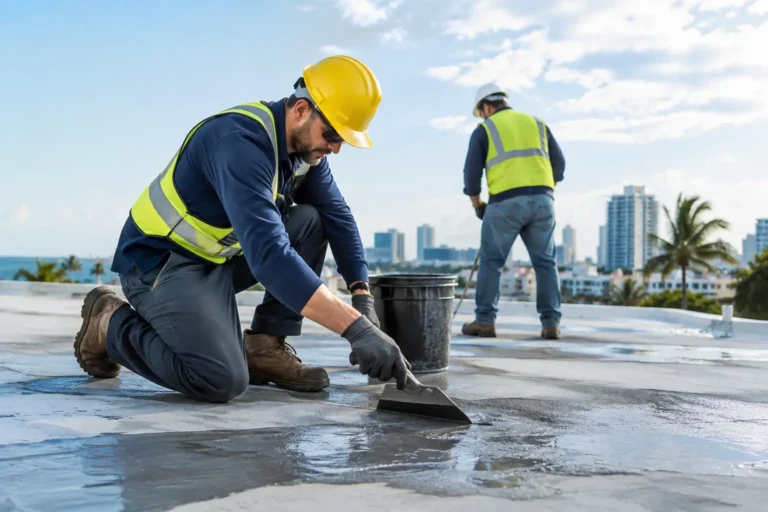
A brown spot spreading across the ceiling during a Miami downpour is not a problem to watch until morning. Water can move along roof decking, framing, electrical pathways, and insulation before it appears indoors. Emergency roof leak repair Miami property owners arrange quickly can limit the damage, protect occupants, and give the roof a proper path back to service.
The priority is not a rushed cosmetic patch. It is finding where water is entering, controlling the immediate risk, and completing a repair that suits the roof system and its condition. A small opening around flashing may need a focused repair. A roof with widespread storm damage, deteriorated materials, or recurring leaks may call for a broader solution.
What to Do When a Roof Starts Leaking
Start inside the building. Move furniture, electronics, inventory, and other valuables away from the affected area. Place containers beneath active drips and use towels to control water spreading across the floor. If a ceiling is visibly sagging or holding water, stay clear of the area. Wet drywall can lose strength without warning.
Do not climb onto a wet roof, especially during high winds or lightning. Miami rainstorms can make tile, shingles, metal panels, and flat roofing surfaces extremely slippery. The source of the indoor drip may also be several feet away from the actual roof opening, so a quick look from the ground rarely tells the full story.
If water is near light fixtures, outlets, electrical panels, or equipment, treat it as a safety concern. Avoid touching wet electrical components and contact a qualified professional for guidance. For commercial properties, protect the area, notify occupants as needed, and document the condition for building records and insurance purposes.
Once it is safe, take clear photos or short videos of the ceiling stain, dripping water, damaged contents, and any visible exterior damage. Documentation can help establish what happened, but it should never delay efforts to protect the property.
Why Emergency Roof Leak Repair in Miami Cannot Wait
South Florida roofs face more than ordinary rainfall. Intense rain, wind-driven water, humid conditions, UV exposure, and tropical weather can expose weak points that were not obvious during dry weather. Water can enter through lifted shingles, cracked tiles, failed sealant, damaged flashing, worn pipe boots, loose fasteners, punctures, or compromised transitions around vents and rooftop equipment.
The visible drip is only one part of the concern. Moisture trapped above ceilings or inside walls can soak insulation, stain finishes, weaken wood components, corrode metal, and create conditions where mold may develop. In a business, the consequences may also include interrupted operations, damaged inventory, slippery floors, and tenant complaints.
Fast action does not always mean a permanent repair can be completed in the middle of severe weather. It means the property receives an informed response: a safety assessment, temporary water control when conditions allow, and a clear plan for permanent work as soon as the roof can be inspected safely. That distinction matters. An emergency covering can reduce additional intrusion, but it is not a substitute for identifying and correcting the underlying failure.
How a Professional Leak Repair Should Proceed
A dependable repair begins with investigation, not guesswork. Water can travel beneath underlayment or roof coverings before it reaches the interior, which is why the leak point and the entry point are not always the same. A qualified roofing team assesses the roof surface, flashing details, penetrations, drainage conditions, and accessible interior areas to trace the likely source.
For a sloped residential roof, the evaluation may focus on broken or displaced tiles, missing shingles, damaged valleys, ridge areas, chimney connections, and flashing around vents. On low-slope commercial roofs, attention often turns to seams, drains, scuppers, ponding water, rooftop curbs, HVAC penetrations, and membrane punctures.
After identifying the condition, the contractor should explain what requires immediate repair and what may need attention later. Clear communication is particularly valuable when a roof has more than one issue. A property owner deserves to know whether the problem is isolated, whether nearby areas show wear, and whether repair remains the sensible long-term choice.
The repair itself should match the roofing material and the cause of the leak. Replacing damaged components without correcting failed flashing or drainage may only postpone another problem. Good workmanship addresses the water path, secures compatible materials correctly, and protects surrounding areas from avoidable damage.
Temporary Measures Have Limits
Property owners sometimes use tarps, sealants, or buckets to get through a storm. These steps can be useful when performed safely, but they have real limitations. A tarp installed incorrectly can trap water, tear in the wind, or cause further damage to the roof surface. Sealant applied to wet, dirty, or deteriorated material may not adhere and can make later diagnosis more difficult.
A temporary repair is appropriate when weather prevents permanent work or when a damaged area needs short-term protection. It should be treated as a bridge, not a final answer. The next dry window should be used to inspect the roof thoroughly and complete the recommended repair.
This is especially true after a storm. A roof may stop dripping once rain ends, yet moisture can remain in the assembly. Waiting for the next heavy storm to see if the problem returns puts the building at risk of more extensive interior damage.
Repair or Replacement? The Answer Depends on the Roof
Not every emergency leak means the entire roof must be replaced. An otherwise sound roof with localized storm damage may be a strong candidate for a targeted repair. This can be the most cost-effective approach when materials are available and the surrounding roof system remains in good condition.
Replacement becomes more reasonable when leaks recur in different locations, roofing materials are near the end of their service life, damage is widespread, or prior repairs have become frequent and unreliable. Commercial properties may also need to consider how drainage, rooftop equipment, and occupied spaces affect the scope of work.
The right decision depends on the roof’s age, material, maintenance history, extent of damage, and the condition beneath the visible surface. A responsible contractor will not present replacement as the only answer when a quality repair is practical. At the same time, repeatedly patching a failing system can cost more over time than planning a replacement properly.
Protect Your Property Before the Next Storm
Emergency calls often reveal maintenance issues that have been developing quietly. Periodic inspections are a practical way to catch damaged flashing, loose roof materials, blocked drains, deteriorated sealants, and debris before heavy rain turns them into interior leaks. This is valuable for homes, rental properties, offices, retail spaces, and multifamily buildings alike.
After significant weather, check the property from the ground for displaced materials, fallen branches, clogged gutters, and water staining near ceilings or exterior walls. Do not assume a roof is fine because there is no active drip. Small problems are easier to repair when they are found before the next storm cycle.
For property owners who need coordinated construction support, Castellón Services Corp. provides roofing work with the same focus on clear scope, careful workmanship, and accountable service that clients expect across their improvement projects. The goal is to protect the building first, then provide a practical recommendation based on its actual condition.
When water enters a roof, prompt attention protects far more than shingles or tiles. It protects the structure, the interior, the people using the space, and the value you have invested in the property. Address the leak safely, get an experienced assessment, and give the repair the attention it needs before the next Miami storm tests it again.