
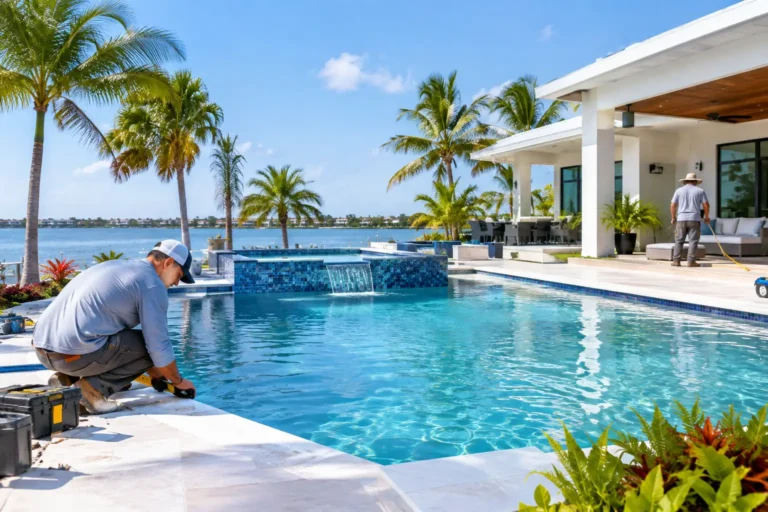
A pool should do more than fill open space behind the house. The best pool design ideas create a comfortable outdoor setting for daily use, weekend gatherings, and the heat, rain, and bright sun that define South Florida living. The right plan also considers drainage, safe access, durable finishes, and how the pool connects with the rest of the property.
Start With How You Want to Use the Pool
A family that wants a place for children to play has different priorities than a homeowner planning quiet evenings outdoors or a property owner improving a rental or vacation home. Before choosing a shape or finish, decide what the pool needs to do most often. That decision should guide the layout, depth, deck space, lighting, and amenities.
For many South Florida homes, a well-planned pool becomes the center of the backyard. It should feel intentional from the moment you step outside, not like a separate feature placed at the far edge of the lot.
1. Choose a Shape That Fits the Property
Rectangular pools remain popular because they suit contemporary homes, work well for swimming laps, and make efficient use of narrow lots. A clean rectangle also pairs naturally with large-format pavers, covered patios, and modern landscaping.
Freeform designs use gentle curves to create a more relaxed appearance. They can soften the lines of a traditional home or work around mature trees and existing patio areas. Geometric pools with L-shapes, angles, or offset sections can define separate spaces for lounging, swimming, and entertaining.
2. Plan the Pool Around Existing Outdoor Areas
A pool should connect logically to the home, patio, outdoor kitchen, and access points. Placing it too far from the house can make the yard feel fragmented and may add unnecessary walking paths, utility runs, and maintenance concerns.
Consider where people will enter the backyard, carry food, set down towels, and move between shaded seating and the water. A thoughtful layout leaves room for circulation without sacrificing valuable deck space.
Pool Design Ideas That Add Everyday Comfort
The features people appreciate most are often the ones that make the pool easier to use on an ordinary afternoon. A dramatic water feature may look impressive, but a wide tanning ledge or properly placed shade may have more value for your household.
3. Add a Tanning Ledge
A shallow tanning ledge gives adults a place to lounge partly in the water and gives younger children a supervised area to splash. It can hold in-pool chairs, umbrellas, or small tables designed for wet environments.
This feature requires enough pool width to remain useful without making the main swimming area feel cramped. On a compact lot, a smaller ledge along one end may be more practical than a large platform.
4. Build in Steps That Invite Use
Wide entry steps create a gradual, welcoming transition into the pool. They are especially helpful for children, older adults, and anyone who prefers to sit at the waterline. Corner steps preserve more open swimming space, while full-width steps create a strong architectural look.
Step placement matters. Avoid locating steps where they interrupt the most natural swim path or create congestion near a main patio entrance.
5. Include a Spa for Year-Round Use
An attached spa can extend the usefulness of the backyard beyond swimming season and provide a separate space for relaxation. Raised spas create visual interest and can double as a water feature when the spillway is designed carefully.
A spa adds equipment, plumbing, and operating costs, so it should be included because it matches how you plan to use the space. If it will rarely be used, investing in a larger patio, shade structure, or upgraded finish may offer better value.
6. Create Shade Near the Water
South Florida sunshine is part of the appeal, but a pool deck without shade can be uncomfortable during the hottest hours. A covered patio, pergola, cabana, or strategically placed umbrellas can make the outdoor area usable longer each day.
Shade should be planned with the sun’s path in mind. A structure that shades seating in the morning but leaves it exposed in the afternoon may not solve the problem. It is also worth considering how columns, roofing, and electrical needs will integrate with the existing home.
Make Materials Work Harder
Pool materials have to withstand direct sun, heavy rain, chemical exposure, regular foot traffic, and occasional storm cleanup. A finish that looks good in a showroom may not be the best choice for a busy backyard.
7. Select Slip-Resistant Decking
The deck is a major safety feature. Textured concrete, pavers, and other slip-resistant surfaces can provide secure footing while complementing the home’s exterior. Lighter colors generally stay cooler underfoot, which is an important consideration in Florida heat.
Pavers also offer design flexibility through color, pattern, and border details. Concrete may be the right choice when a continuous appearance or a specific finish is preferred. The best option depends on the desired look, budget, drainage plan, and long-term maintenance expectations.
8. Use a Waterline Tile That Stays Timeless
Waterline tile protects the pool shell at a high-visibility area and adds color or texture without overwhelming the design. Deep blue tile creates a classic look, while neutral stone tones can make the pool feel more connected to a natural landscape.
Trendy patterns can be appealing, but tile is not the easiest element to change later. Selecting a finish with lasting appeal helps protect the investment and keeps future updates simple.
9. Choose an Interior Finish for the Water Color You Want
The pool’s interior finish affects how the water appears. Lighter finishes often create clear, bright blue water, while darker finishes can give the pool a deeper, more reflective look. Sun exposure, surrounding colors, and water depth all influence the final effect.
Ask to see finish samples in natural light. A color that looks subtle indoors can appear very different under direct sun.
Add Character Without Overbuilding
The most successful custom pools have a clear focal point, not a competing collection of features. Select details that fit the architecture of the home and support the way the backyard will be used.
10. Use Water Features With Purpose
Sheer descents, scuppers, bubblers, and spillways bring movement and sound to the pool. They can also help define zones, such as a shallow ledge or raised spa. However, more features are not always better. Too much water movement can make conversation difficult and increase operating demands.
Choose a feature that complements the scale of the pool. A small courtyard may benefit from a quiet spillway, while a larger entertaining area can support a more visible feature wall.
11. Design a Feature Wall
A tiled or finished feature wall gives the backyard a clear visual anchor. It can incorporate water features, planters, lighting, or a simple raised edge behind the pool. This approach works particularly well when the property needs more privacy from neighboring homes.
The wall should be built with proper drainage and durable exterior materials. Good construction matters as much as the finish, especially in an exposed outdoor environment.
12. Light the Pool and the Pathways
Underwater lights make evening swimming safer and extend the pool’s use after sunset. Warm pathway lighting, step lighting, and subtle landscape lighting improve visibility without turning the backyard into a glare-filled space.
Plan lighting early, before decking and landscaping are complete. This allows electrical work to be coordinated properly and reduces the need to disturb finished surfaces later.
Design for Safety, Drainage, and Maintenance
A beautiful pool should also be straightforward to own. Early decisions about access, drainage, equipment placement, and safety can prevent expensive changes after construction is underway.
13. Keep Equipment Accessible but Discreet
Pool equipment needs adequate clearance for service and should be positioned where operating noise will not disrupt seating areas or bedrooms. Screening with landscaping or a coordinated enclosure can improve the view without restricting access.
A qualified contractor can help determine the most practical location based on the lot, utilities, code requirements, and equipment selected.
14. Build Drainage Into the Deck Plan
Heavy rain is common across Miami-Dade, Broward, and Palm Beach counties. The deck should slope correctly so water moves away from the home and does not collect near the pool edge, patio doors, or walkways.
Drainage is easy to overlook when selecting finishes, yet it protects the surrounding hardscape and makes the space safer after a storm. Coordinating the pool deck, concrete work, pavers, and yard grading under one project plan helps avoid conflicts between trades.
15. Allow Room for Fencing and Safe Access
Pool barriers, self-closing gates, and secure access are essential considerations for homes with children, pets, guests, or tenants. Safety features do not need to detract from the design. Glass panels, aluminum fencing, and carefully placed gates can preserve sightlines while supporting a secure backyard.
It is also wise to consider how maintenance crews and future repairs will access the pool area. Leaving a practical route around the property can save time and disruption later.
Bring the Whole Backyard Together
A pool project often creates the right opportunity to address surrounding improvements, including patios, walkways, outdoor electrical, drainage, landscaping borders, and fencing. Treating these elements as one coordinated plan produces a cleaner result than completing them in separate stages.
Castellón Services Corp. helps property owners plan and build outdoor spaces with the same attention to workmanship, safety, and reliable scheduling applied across every construction project. The goal is not simply to install a pool, but to create an outdoor area that fits the property and remains enjoyable for years.
The strongest design choice is the one that makes your backyard easier to use. Start with your daily routine, allow for South Florida weather, and choose materials and features that will continue to serve your home long after the first swim.