
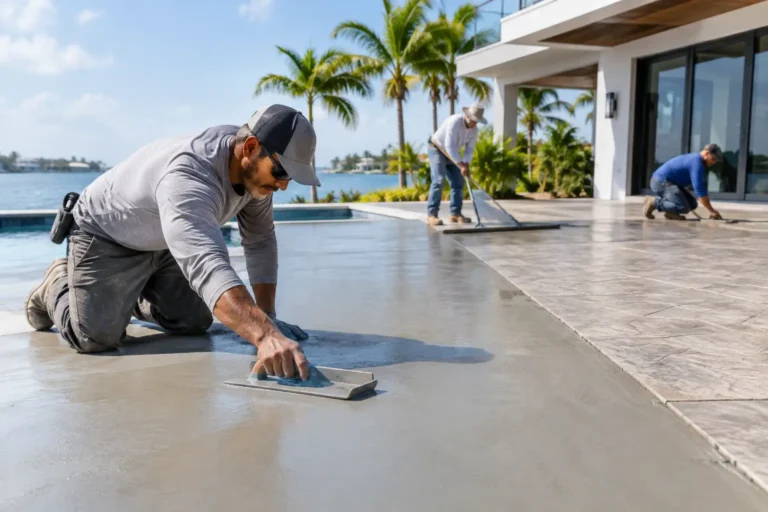
A concrete slab can be structurally sound and still be the wrong surface for the way a property is used. The right concrete finish options affect traction after rain, heat underfoot, cleaning requirements, curb appeal, and how well the surface fits the rest of the home or commercial site. For South Florida properties, where sun, moisture, pool water, and frequent use are part of the equation, the finish deserves the same planning as the concrete itself.
A finish is not simply a decorative last step. It influences day-to-day safety and long-term performance. A smooth, polished-looking surface may suit a covered interior area, while a driveway, walkway, or pool deck typically needs more texture. The best choice depends on the location, the expected traffic, the surrounding design, and the level of maintenance the owner is prepared to provide.
Start With How the Surface Will Be Used
Before choosing color, pattern, or texture, consider what happens on the slab every day. A residential driveway needs to handle vehicle weight, tire marks, and exposure to the elements. A pool deck needs comfortable footing and reliable slip resistance. A storefront entry, restaurant patio, or commercial walkway needs to stay attractive while standing up to regular foot traffic and routine cleaning.
Drainage also matters. No finish can correct an improperly sloped slab. Water should move away from buildings and avoid collecting in low areas, especially near doors, pool surrounds, and pedestrian paths. Proper site preparation, concrete placement, control joints, and finishing work all contribute to a surface that performs as intended.
It is also worth thinking about repairs and future changes. A highly customized decorative finish can be beautiful, but matching it after a repair may take more care than matching a standard broom-finished surface. That does not make decorative concrete a poor choice. It simply means the design should fit the property owner’s long-term plans.
Common Concrete Finish Options
Broom finish
A broom finish is one of the most practical choices for exterior concrete. While the concrete is still workable, a broom is pulled across the surface to create fine, consistent grooves. The result is a clean texture that improves traction without looking overly rough.
This finish works well for driveways, sidewalks, walkways, parking areas, and service paths. It is dependable, economical, and easy to maintain. The texture can be adjusted from light to more pronounced depending on the application, although an overly aggressive finish may be less comfortable for bare feet around a pool or patio.
For many properties, a broom finish is the right answer because it puts safety and durability ahead of unnecessary complexity. It can also be paired with integral color or a tinted sealer when a plain gray appearance does not fit the design.
Smooth trowel finish
A smooth trowel finish creates a flatter, more refined appearance. It is commonly used for interior concrete floors, covered spaces, utility rooms, garages, and areas that may later receive tile, coatings, or other flooring materials. The finish is achieved by working the surface with hand trowels or power equipment.
Outdoors, smooth concrete requires caution. When rain, condensation, or pool water is present, a very smooth surface can become slippery. It may be appropriate for a covered lanai or a protected decorative feature, but it is usually not the first choice for exposed walkways or pool decks. If a smoother appearance is preferred outside, a contractor can discuss textured sealers or other methods that preserve traction.
Exposed aggregate
Exposed aggregate reveals selected stone within the concrete surface. After placement, the outer cement layer is removed in a controlled way, leaving decorative aggregate visible. The finished surface has natural variation, texture, and a higher-end appearance than plain concrete.
This option is often used for patios, walkways, driveways, and pool surrounds. It provides good traction and can complement tropical landscaping, stone details, or contemporary exterior designs. The trade-off is that exposed aggregate requires careful installation and periodic cleaning to keep the stone visible and attractive. Sealing can help protect the surface from staining and support easier maintenance.
Aggregate selection makes a real difference. Smaller stones tend to create a more comfortable walking surface, while larger aggregate can produce a bolder look and more pronounced texture. A sample panel is useful when the final appearance is important, since aggregate color and exposure depth affect the finished result.
Stamped concrete
Stamped concrete is designed to resemble materials such as natural stone, brick, slate, tile, or wood planks. Patterns are pressed into fresh concrete, often along with color hardeners, release agents, or stains that add depth and variation. It can deliver a custom look without the jointing and shifting issues associated with some individual pavers.
For patios, entryways, decorative walkways, and certain driveways, stamped concrete can make a strong visual statement. It also offers broad design flexibility. However, it requires a skilled installation process, thoughtful joint placement, and a maintenance plan that includes resealing when needed. High-gloss sealers may look attractive at first but can be slippery when wet, so finish selection is particularly important around pools and exterior entries.
Stamped surfaces can be a good investment when design is a priority, but they are not always the best fit for heavily used commercial loading areas or simple utility spaces. In those settings, a practical textured finish may deliver better value.
Salt finish
A salt finish creates small, shallow pits across the concrete surface. Rock salt is pressed into fresh concrete and later washed away, leaving a subtle textured pattern. The result is less uniform than a broom finish and often has a relaxed, natural appearance.
This finish is popular around pools because it offers texture underfoot without the sharper feel of some exposed aggregate surfaces. It can also work well for patios and garden walkways. Because the surface contains small depressions, regular cleaning is helpful to prevent dirt buildup, especially in shaded areas or places where leaves and debris collect.
Colored and stained concrete
Color can be incorporated into several concrete finish options rather than treated as a separate finish. Integral color is mixed into the concrete, while stains, dyes, and topical color systems are applied after placement. These approaches can add warmth, coordinate with exterior paint, or help distinguish pedestrian areas from vehicle zones.
Integral color is generally valued for its consistent tone through the slab, while stains can create a more variegated, decorative effect. Neither approach eliminates the need for sound concrete work underneath. Color cannot hide poor drainage, cracking caused by movement, or surface damage from improper installation. It should enhance a well-built slab, not compensate for a weak one.
Selecting the Right Finish for Each Area
The most effective projects often use more than one approach. A driveway may receive a broom finish for dependable traction, while a front entry includes a stamped border or colored concrete accent. A pool deck may use a salt finish, while nearby equipment pads remain simple and functional.
When comparing finishes, property owners should weigh five practical questions:
- Will the surface regularly get wet from rain, irrigation, or pool use?
- Does it need to support vehicles, carts, equipment, or only foot traffic?
- Is barefoot comfort a priority?
- How much cleaning and resealing is realistic over the years?
- Does the finish need to match an existing hardscape, building exterior, or neighborhood style?
For commercial properties, visual consistency and maintenance planning are especially important. A finish that looks impressive on opening day but requires frequent specialized care may not be the most practical choice for a busy site. Clear expectations about cleaning, resealing, traffic patterns, and repair access help protect the investment.
Installation Quality Matters as Much as Appearance
Even the best finish cannot overcome poor concrete placement. A lasting surface starts with appropriate base preparation, reinforcement when required, correct thickness for the intended load, proper drainage, and carefully planned control joints. The timing of finishing work matters as well. Finishing concrete too early, overworking the surface, or adding water to the top can weaken the slab and contribute to scaling or premature wear.
Curing is equally important in South Florida conditions. Heat, wind, and sudden rain can affect fresh concrete quickly. Professional crews monitor conditions, protect the work as needed, and follow curing practices that support strength and surface durability. Decorative finishes add another layer of coordination because patterns, colors, and sealers must be applied at the right stage.
A contractor should explain what finish is recommended, why it fits the space, and what maintenance it will require. That conversation is often more valuable than selecting a finish from a photo alone.
Plan for the Surface You Want to Live With
Concrete should make a property easier to use, safer to walk on, and more appealing from the street or patio door. The best finish is not automatically the most decorative or the least expensive. It is the one that suits the traffic, weather exposure, maintenance expectations, and character of the space.
For homeowners and property managers in South Florida, a clear site evaluation can turn a broad range of concrete finish options into a confident decision. Castellón Services Corp. can help align the finish, layout, drainage, and workmanship so the completed surface looks right and performs reliably for years to come.