
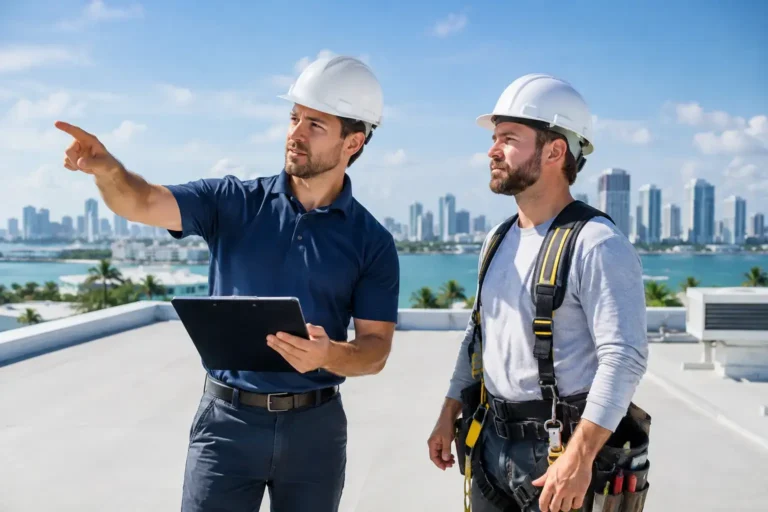
A roof problem in Miami rarely announces itself at a convenient time. A small ceiling stain after heavy rain, lifted shingles after a storm, or water near an electrical fixture can quickly become a larger repair if the response is delayed or poorly managed. Knowing how to choose Miami roofers helps you protect the property, control costs, and avoid hiring someone who disappears after collecting a deposit.
The right contractor does more than install materials. They inspect the full roofing system, explain what they find in plain language, provide a clear scope of work, protect the jobsite, and stand behind the workmanship. Whether you manage a commercial building or own a family home, selection should be based on evidence, communication, and the contractor’s ability to complete the specific job in front of you.
How to Choose Miami Roofers Before You Sign a Contract
Start with the contractor’s legal and professional standing. Florida roofing work carries real safety, permitting, and weather-resistance requirements. A qualified roofer should be able to provide current licensing information, proof of general liability insurance, and workers’ compensation coverage or applicable exemption documentation. Do not assume these documents are in place because a company has a truck, a social media page, or a low quote.
Verify the information independently when possible. Licensing and insurance protect more than the contractor. They help protect the property owner if a worker is injured or if the project creates damage to the building or a neighboring property. For commercial owners and managers, proper documentation is also a basic part of vendor risk management.
Experience matters, but relevant experience matters more. A contractor may have years in general construction yet limited experience with the roof system on your property. Ask whether the company regularly works with your material, such as shingle, tile, metal, flat roofing, or low-slope commercial systems. A crew that understands the details of your roof type is more likely to identify the true source of a leak and recommend repairs that fit the system.
Ask for an inspection, not a guess
Be cautious when a contractor recommends full replacement without a thorough inspection, especially if the assessment is made from the ground or after only a few minutes on the roof. Some roofs need replacement because of age, widespread material failure, recurring leaks, or storm damage. Others can be repaired effectively when the issue is localized.
A professional inspection should consider visible damage, flashing, penetrations around vents and pipes, drainage, underlayment concerns, roof edges, and signs of moisture inside the building. On a commercial property, the contractor should also assess areas where equipment, drains, curbs, or previous repairs may affect water flow.
Ask the roofer to explain the recommendation in practical terms. Where is the problem? What caused it? Is a repair likely to hold, and for how long? What would make replacement the more sensible investment? Straight answers are more valuable than dramatic claims about an urgent catastrophe.
Compare Written Roofing Scopes, Not Just Prices
The lowest estimate can become the most expensive choice if it leaves out essential work. Roof proposals should be detailed enough that you can compare one contractor’s offer to another without guessing what is included.
A clear written scope should identify the work area, roof material and manufacturer when applicable, tear-off or repair requirements, underlayment, flashing, ventilation considerations, disposal, site protection, permit responsibilities, and expected timeline. It should also state how unforeseen conditions will be handled. For example, if deteriorated decking is uncovered after old materials are removed, you should know the unit price or approval process before work begins.
When comparing estimates, look beyond the total. One contractor may include replacement flashing and proper waterproofing details, while another may price only surface materials. The second quote may appear less expensive but leave the property exposed at the areas most likely to leak.
A reliable contractor will not pressure you to make a same-day decision simply because a discount is about to expire. Roofing is a significant investment. You should have enough time to review the scope, ask questions, and confirm that the proposal addresses the actual condition of your roof.
Understand materials and warranties
Roofing materials are not interchangeable, and the best choice depends on the structure, roof slope, budget, neighborhood requirements, wind exposure, and long-term plans for the property. A homeowner planning to sell soon may prioritize a cost-conscious solution with dependable protection. An owner planning to keep the building for decades may reasonably invest more in a longer-lasting system.
Ask what materials are being proposed and why. The contractor should explain the expected performance, maintenance needs, color or finish options when relevant, and compatibility with the existing roof design. If a repair is proposed, ask whether matching materials are available and whether the repaired section may look different from the surrounding roof.
Also separate manufacturer warranties from workmanship warranties. A manufacturer warranty generally relates to product defects under stated conditions. A workmanship warranty addresses problems caused by installation. Both have value, but neither replaces careful installation, proper flashing, and good water management.
Look for Communication You Can Count On
Roofing work affects daily life and business operations. The crew may create noise, restrict access, require parking adjustments, and generate debris during tear-off. The contractor should set expectations before the first truck arrives.
Pay attention to how the company communicates during the estimating stage. Are calls returned? Are questions answered directly? Does the proposal arrive when promised? A contractor’s early responsiveness is not a guarantee, but it is often a useful indication of how the project will be managed once work begins.
For occupied homes, ask how landscaping, driveways, pool areas, and outdoor equipment will be protected. For commercial sites, discuss customer access, tenant notices, safety barriers, staging areas, and work hours. A capable roofer plans around the property rather than treating those details as someone else’s problem.
You should also know who your point of contact will be. Clear accountability prevents the common frustration of being passed between salespeople, office staff, subcontractors, and crews when a question arises.
Review Local Reputation With Context
References and reviews can reveal useful patterns, particularly about punctuality, cleanliness, communication, and follow-through. Read more than the star rating. Look for comments from property owners with projects similar to yours and notice how the company responds when an issue is raised.
It is reasonable to ask for recent references or examples of comparable completed work. When speaking with a reference, ask whether the final price matched the approved scope, whether the crew protected the property, and whether the contractor responded if a follow-up was needed.
No contractor will have a flawless history, and a few negative comments do not automatically disqualify a company. What matters is the pattern. Repeated complaints about abandoned jobs, surprise charges, poor cleanup, or unanswered warranty requests should carry weight.
Watch for Roofing Red Flags
After a storm, property owners may be approached by door-to-door solicitors offering immediate repairs. Some legitimate contractors use this approach, but urgency should never replace verification. Slow down if a roofer asks for a large cash payment, refuses to provide written documentation, cannot show insurance, or says permits are unnecessary without explaining why.
Other warning signs include vague estimates, pressure to sign an insurance-related document you do not understand, promises that seem far better than every competing proposal, and requests to make checks payable to an individual instead of the contracting business. A trustworthy contractor welcomes informed questions because clear expectations reduce disputes for everyone.
For storm-related claims, document the condition of the roof and interior before repairs begin when it is safe to do so. Emergency measures may be necessary to prevent further damage, but keep records of the work performed, materials used, and payments made.
Choose a Partner for the Whole Property
Roofing decisions often connect to other property needs. Water intrusion can affect ceilings, electrical components, insulation, exterior finishes, and structural areas. If the project includes related construction work, coordination between trades can reduce delays and prevent one repair from damaging another.
Castellón Services Corp. approaches roofing with that broader property perspective, combining hands-on construction experience with clear communication, safety-focused work practices, and accountability from inspection through completion. The goal is not simply to put materials on a roof. It is to provide lasting protection that fits the property and the owner’s plans.
Before approving any roofing project, take the time to verify credentials, understand the written scope, and choose the contractor who communicates clearly before the work starts. A roof is too central to your property’s safety and value to leave to a rushed decision.