
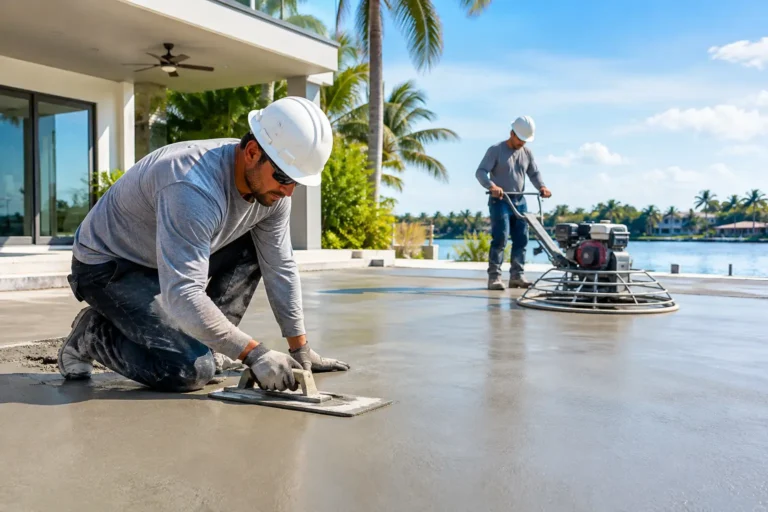
A patio in Miami has to handle more than weekend barbecues. It faces intense sun, sudden downpours, humidity, pool traffic, furniture movement, and daily foot traffic. The right concrete patio contractor Miami property owners choose will plan for those conditions from the beginning, not simply pour a slab and hope it holds up.
A well-built concrete patio can make a backyard easier to enjoy, improve usable outdoor space, and create a durable foundation for seating, grilling, dining, or poolside living. The quality of the result depends on decisions made before concrete arrives: drainage, site preparation, reinforcement, slope, finish, and clear communication about the scope of work.
Start With the Patio’s Real Purpose
Before requesting estimates, decide how the patio will be used. A small sitting area outside a back door has different requirements than a large entertainment space beside a pool. Commercial properties may need a functional concrete area for pedestrian circulation, outdoor seating, or an entrance that must remain safe and presentable for customers.
Think about furniture placement, access points, shade, drainage paths, and whether the patio may later connect to a walkway, driveway, outdoor kitchen, screen enclosure, or pool deck. These details affect the footprint and may influence where joints, edges, and transitions should be placed.
It also helps to be realistic about finish choices. A basic broom finish is practical, slip-resistant, and often cost-effective. Decorative finishes can provide more visual character, but they can require additional preparation, materials, and maintenance. The best choice is the one that fits the property, expected use, and budget without sacrificing safety.
What a Concrete Patio Contractor in Miami Should Evaluate
A professional site visit should be more than a quick measurement. The contractor should look at existing grades, soil conditions, nearby structures, drainage routes, landscaping, utility considerations, and access for equipment and materials. On a tight residential lot, access can influence labor and scheduling. On commercial sites, the work may need to be phased to limit disruption.
Drainage deserves particular attention in South Florida. Standing water can make a patio unpleasant to use and may contribute to staining, slippery areas, or erosion around the edges. A patio should be designed with a controlled slope that directs water away from the building and toward an appropriate drainage area. The exact solution depends on the lot, existing elevations, and local conditions.
The contractor should also identify whether old concrete needs to be removed, whether the base requires correction, and how the new patio will meet existing doors, walkways, pool coping, or landscaping. A low patio that creates water intrusion near a doorway is not a successful installation, even if the finish looks good on day one.
Site Preparation Is Where Durability Begins
Concrete is only as reliable as the base beneath it. Proper preparation typically includes clearing the area, establishing the correct grade, compacting the subbase as needed, setting forms, and placing reinforcement according to the patio design and site conditions. Skipping these steps to move faster can lead to settlement, uneven surfaces, or premature cracking.
Concrete can crack over time. That is a normal characteristic of the material, especially in a climate with changing moisture levels and ground movement. The goal is not to promise that concrete will never crack. The goal is to build the patio correctly and use control joints to help manage where cracking is most likely to occur.
Ask how the contractor plans to address expansion and control joints, reinforcement, slab thickness, and transitions to other surfaces. Clear answers show that the work is being approached as a long-term improvement rather than a short-term cosmetic project.
Compare Estimates by Scope, Not Just Price
The lowest estimate can be appealing, but it may leave out essential work. One contractor may include demolition, hauling, base preparation, reinforcement, forming, finishing, cleanup, and sealing, while another may price only the visible concrete placement. Those are not equal proposals.
A useful estimate should describe the patio dimensions, the intended finish, whether existing materials will be removed, how drainage will be handled, and what is included in site cleanup. If decorative work is involved, the proposal should explain what finish is planned rather than relying on vague language such as “custom concrete.”
When reviewing bids, ask the same questions of each contractor. Confirm the expected schedule, who will be supervising the work, how changes are approved, and what happens if an unforeseen site condition is discovered. A clear scope protects both the property owner and the contractor from confusion after the work begins.
Price still matters. It should be evaluated alongside workmanship, preparation, communication, and accountability. A patio that needs repair because of poor drainage or inadequate base work is rarely the more affordable choice over time.
Choose a Finish That Works in South Florida
The patio finish should match how the space will be used. Near pools, steps, and high-traffic areas, traction should be a priority. A broom finish is a common practical choice because it provides texture without being difficult to maintain. A smooth finish may suit certain covered areas, but it can become slippery when wet.
Stamped or decorative concrete can complement a home’s exterior and offer the look of more expensive materials. However, decorative surfaces may require more planning, especially when matching colors, creating borders, or applying protective coatings. They can be a good investment when appearance is a major goal, but they should not be selected without considering slip resistance, heat exposure, and long-term upkeep.
Color is another decision worth discussing early. Light tones can help reduce surface heat in exposed areas, while darker colors may show fading, dust, or water spots differently. There is no universal best finish. The right option depends on sunlight, shade, traffic, maintenance expectations, and the surrounding design.
Communication Protects the Project Schedule
Even a straightforward patio project involves coordination. Weather can affect concrete placement and curing. Material delivery, access limitations, permit requirements, and changes to the design can also influence the schedule. A dependable contractor communicates these factors early instead of making promises that do not reflect site realities.
Property owners should know when the crew will arrive, where equipment will be staged, what areas need to remain clear, and when the new patio can safely be walked on or used. Concrete needs time to cure. Using it too soon with heavy furniture, grills, or vehicles can damage a surface that was otherwise installed properly.
For commercial properties, communication is especially important. Work may need to be scheduled around customer access, tenant operations, parking availability, and safety measures. A contractor with broader construction experience can help coordinate the patio work with related paving, electrical, drainage, or remodeling needs when the project calls for it.
Questions Worth Asking Before You Hire
A contractor should be comfortable discussing the work in plain language. Before signing an agreement, ask about the planned slope and drainage, base preparation, reinforcement, joints, finish, estimated timeline, cleanup, and curing instructions. Request that major details be documented in the written scope rather than relying on verbal assumptions.
You should also ask who is responsible for permits if they are required and whether the contractor carries appropriate insurance for the project. If the patio connects to a larger improvement, such as a pool, outdoor kitchen, or roof drainage correction, confirm how the different parts of the project will be coordinated.
Pay attention to how the contractor responds. Direct answers, realistic expectations, and a willingness to explain trade-offs are strong signs. A professional contractor does not pressure you to decide before you understand what is being built and why.
Build for Daily Use, Not Just the Reveal
A new patio should feel like a practical extension of the property, not a surface that looks good only in photographs. Proper planning creates room for the way people actually move, gather, clean, and enjoy the space. It also helps prevent frustrating problems such as puddling, awkward steps, or a patio that is too small for the furniture it was meant to hold.
For Miami-Dade, Broward, and Palm Beach County property owners, choosing an experienced partner can make the process far more manageable. Castellón Services Corp. approaches concrete work with the same focus on quality, safety, reliable scheduling, and clear communication brought to every construction project. A thoughtful site evaluation and a detailed quote are the right first steps toward a patio built to serve your property for years to come.