
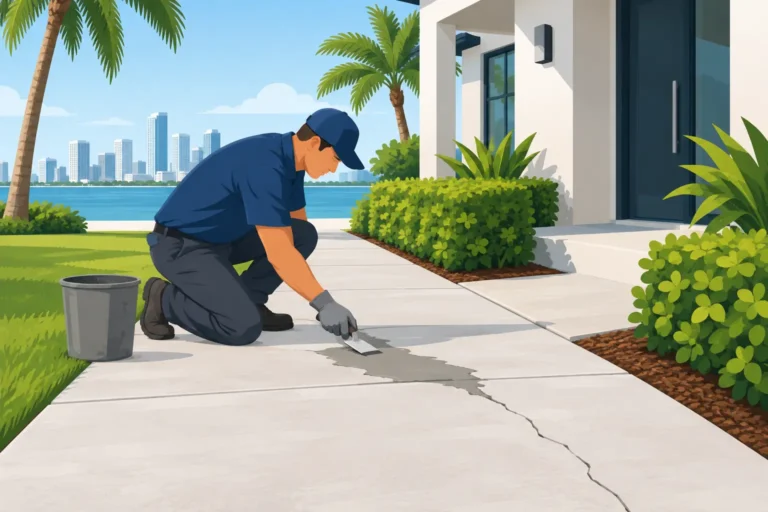
A walkway can look like a minor part of a property until someone catches a toe on a raised slab, steps into a widening crack, or watches rainwater collect against the foundation. Concrete walkway repair Miami property owners arrange at the right time protects visitors, improves curb appeal, and prevents a manageable surface issue from becoming a larger repair.
Miami’s heat, intense rainfall, sandy soils, tree roots, and constant moisture all place pressure on exterior concrete. The right repair is not always the fastest patch. It starts with understanding why the walkway moved, cracked, or deteriorated, then choosing a solution that supports safe, long-lasting use.
When a Concrete Walkway Needs Attention
Not every hairline crack means a walkway has failed. Concrete naturally develops small surface cracks as it cures and ages. But damage deserves a closer look when it changes the way people walk across the surface or allows water to reach the soil below.
A crack that is widening, uneven slabs that create a lip, crumbling edges, standing water, or sections that slope toward a building are clear signs to schedule an evaluation. Homeowners should also pay attention to exposed reinforcement, rust stains, loose pieces of concrete, and movement near trees or drainage paths.
For commercial properties, the concern is even more immediate. An uneven or damaged pedestrian route can create trip hazards for tenants, customers, employees, and delivery personnel. Addressing it promptly helps property managers maintain a cleaner, safer site while avoiding the disruption of a more extensive replacement later.
What Causes Walkway Damage in South Florida?
Concrete is durable, but the ground beneath it matters just as much as the concrete itself. In South Florida, moisture can wash away or shift supporting soil. A slab may settle when voids form beneath it, while a nearby tree root can lift one section above another. Poor drainage can keep water against the walkway, weakening the base and contributing to cracking or surface deterioration.
Installation conditions also play a role. Concrete placed over an improperly prepared base, without adequate control joints, or with insufficient drainage may develop problems sooner. Heavy loads can cause damage too. A walkway designed for foot traffic should not regularly support vehicles, equipment, or large delivery carts.
Salt air and wet conditions can accelerate deterioration where reinforcement is exposed or where the concrete surface has already become porous. The visible crack is often only one part of the issue. A dependable contractor looks below and around the damaged area to identify the cause before recommending work.
Concrete Walkway Repair Miami Solutions That Fit the Damage
The best repair depends on the walkway’s condition, the underlying cause, and the property owner’s goals. A localized crack in an otherwise stable path calls for a different approach than multiple sunken slabs or a walkway with widespread surface failure.
Crack repair and joint sealing
For stable, narrow cracks, professional cleaning and appropriate repair materials can help keep moisture and debris out of the opening. Joints may also need sealing when water is entering beneath the slabs. This approach works best when the concrete remains level and the base is sound. It improves appearance and limits further intrusion, but it will not correct active settlement or root pressure.
Leveling a settled section
When one slab has sunk but remains structurally intact, leveling may be a practical option. The process raises the section by filling voids or supporting the slab from below, reducing abrupt height differences. It can be less disruptive than removal, although it is not suitable for concrete that is badly fractured, severely deteriorated, or still moving because the drainage or soil problem has not been resolved.
Removing and replacing damaged concrete
Replacement is often the better investment when cracking is extensive, the surface is spalling, reinforcement is compromised, or the walkway has poor slope and drainage. A proper replacement includes removing failed concrete, preparing and compacting the base, establishing the right pitch, and placing new concrete with joints that help manage normal movement.
Replacement also gives property owners an opportunity to improve the walkway’s width, layout, transitions, and finish. For a home, that may mean creating a cleaner path from the driveway to the entry. For a commercial site, it may mean restoring a more functional and presentable pedestrian route.
Why Drainage Cannot Be an Afterthought
Water should move away from buildings and should not linger along the edges of a walkway. If a repair simply covers a crack while runoff continues to flow under the concrete, the same issue can return. During an assessment, look at where roof runoff, landscape irrigation, and heavy rain travel across the property.
Sometimes the solution includes adjusting the walkway slope. In other cases, downspout discharge, nearby grading, drainage channels, or landscaping may need attention as part of the larger project. This is where working with a full-service construction contractor can simplify planning. The walkway repair and the conditions affecting it can be coordinated instead of treated as unrelated problems.
Choosing the Right Finish for Safety and Appearance
A walkway needs traction as well as a clean appearance. A smooth troweled surface can become slippery when wet, particularly around pool areas, entryways, or shaded locations. A broom finish is a practical option for many residential and commercial walkways because it provides texture without making the surface difficult to clean.
Decorative finishes can also work well when they match the property. Stamped concrete, exposed aggregate, color, or a bordered layout can improve curb appeal, but appearance should not outweigh drainage, safe transitions, and a durable base. For heavily used commercial paths, a straightforward, properly finished concrete surface is often the most sensible choice.
A Clear Repair Process Prevents Surprises
A professional walkway project should begin with a site review and a defined scope. The contractor should identify the damaged sections, determine whether repair or replacement makes sense, discuss access needs, and explain how surrounding landscaping, gates, irrigation, or parking areas may be affected.
Before work begins, homeowners and managers should know what will be removed, how the base will be prepared, where joints will be placed, and what finish will be used. They should also receive realistic guidance on curing time. Fresh concrete may appear firm quickly, but it needs time to gain strength. Keeping foot traffic off the surface until the contractor approves use helps protect the finished work.
Communication matters throughout the project. On a commercial property, work may need to be phased to preserve access for customers or tenants. At a residence, careful planning can minimize disruption to entrances, pets, vehicles, and daily routines. A reliable crew keeps the job area orderly and addresses practical details rather than leaving them for the property owner to solve.
When Repair Is Not Enough
There is a point where repeated patching costs more than a properly planned replacement. Consider replacement when a walkway has several uneven slabs, widespread cracking, recurring settlement, deteriorated edges, or water that consistently drains in the wrong direction. A new walkway can correct underlying deficiencies that cosmetic repairs cannot.
That does not mean every older walkway needs to be removed. Sound concrete with limited, stable damage can often be repaired effectively. The key is an honest recommendation based on the condition of the surface, base, drainage, and nearby landscape. The least expensive option today is not always the most affordable option over the next several years.
Planning a Safer Walkway for Your Property
If you are evaluating concrete walkway repair in Miami, start by documenting where the damage occurs and whether it changes after heavy rain. Note trip points, low areas, and cracks that are growing. Avoid temporary fixes that create a new raised edge or conceal an active drainage problem.
Castellón Services Corp. approaches concrete work with the same focus applied to larger property improvements: careful evaluation, dependable workmanship, safe job sites, and clear communication from start to finish. Whether the work involves a targeted repair or a complete walkway replacement, the goal is a surface that looks right, drains properly, and gives people a safer path every day.
A walkway should quietly do its job – guide people where they need to go without becoming a hazard or a maintenance concern. Addressing damage early gives your property the best chance to stay safe, welcoming, and ready for South Florida weather.