
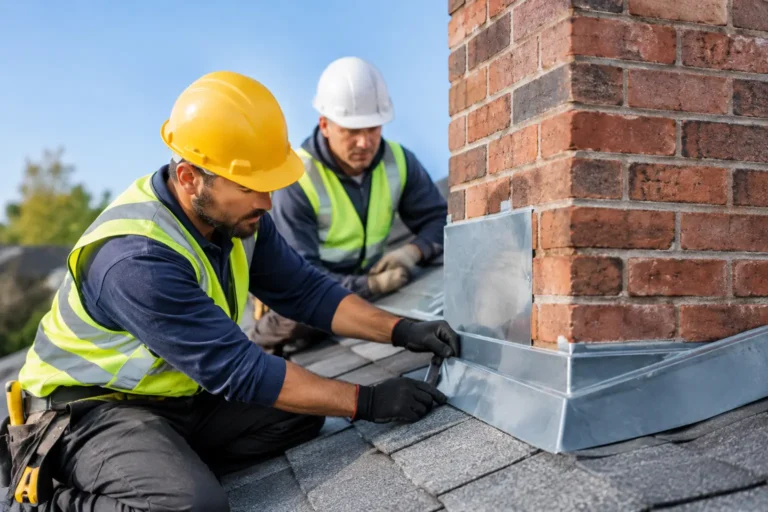
A roof can look sound from the street and still allow water into the building at its most vulnerable points. Knowing when to replace roof flashing helps homeowners and property managers address small problems before they turn into stained ceilings, damaged framing, mold concerns, or disruptive interior repairs. Flashing is a relatively small part of a roofing system, but it does critical work wherever the roof meets a wall, chimney, vent, skylight, valley, or other change in surface.
In South Florida, intense sun, wind-driven rain, humidity, and tropical storms can wear down these protective details faster than many property owners expect. The right response depends on the flashing material, the condition of the surrounding roof, and whether water has already found a path indoors.
What Roof Flashing Does
Roof flashing is typically made from metal, though some installations use specialized membranes or sealant-supported materials. Its purpose is to direct water away from joints and openings that shingles, tiles, or roofing panels cannot protect on their own.
For example, step flashing guides water away where a sloped roof meets a vertical wall. Pipe flashing seals around plumbing vents. Chimney flashing protects the joint between masonry and roofing materials. When flashing is properly installed and integrated with the roof covering, water flows over it and off the roof instead of working its way underneath.
Because flashing often sits at roof transitions, a failure can create a leak that appears far from the actual source. Water may travel along decking or framing before it reaches a ceiling, wall, or light fixture. That is why a visible interior stain should be investigated promptly rather than treated as a cosmetic issue.
7 Signs It Is Time to Replace Roof Flashing
Not every flashing concern requires full replacement. A loose section may be repairable, and failed sealant can sometimes be renewed if the underlying metal and roof materials remain in good condition. Replacement is usually the more dependable solution when the flashing itself is compromised.
1. Rust, corrosion, or visible holes
Metal flashing should create a continuous water barrier. Rust spots, pitting, flaking metal, and pinholes weaken that barrier. Corrosion is especially concerning near roof edges, chimneys, and penetrations that see repeated exposure to moisture.
Small areas of surface discoloration do not always mean immediate failure, but deep corrosion or holes call for replacement. Applying sealant over deteriorated metal may slow a leak temporarily, but it does not restore the material’s strength or proper water-shedding ability.
2. Cracks, bends, or lifted edges
Flashing must lie in the correct position to direct water away from the roof assembly. Wind, falling debris, foot traffic, thermal movement, and past repair work can bend or lift the metal. Cracks may also develop at folds, fastener points, or areas that have been repeatedly flexed.
If edges have pulled away from the roof or wall, rain can be driven behind the flashing. This is a common concern after severe weather, even when shingles or tiles appear intact from ground level.
3. Dried, split, or missing sealant
Sealant is not a substitute for correctly installed flashing, but it is often used at joints and fasteners as an added layer of protection. Over time, sealant can shrink, crack, lose adhesion, or separate from the surrounding surface.
When the flashing beneath it is still solid and correctly positioned, resealing may be appropriate. If the sealant has been repeatedly applied over warped, rusted, or improperly installed flashing, replacement is generally the better long-term decision. Multiple layers of patch material can conceal the real condition while allowing water to remain trapped underneath.
4. Water stains, peeling paint, or musty odors indoors
A brown ceiling mark, bubbling paint, damp drywall, or musty odor near a chimney, exterior wall, skylight, or bathroom vent may point to a flashing leak. These signs can worsen after heavy rain and seem to disappear during dry weather.
Do not assume the roofing material itself is the only possible cause. A qualified inspection can trace the water path and determine whether the flashing, roof covering, underlayment, or another building component needs attention. Finding the source matters because interior repairs alone will not stop continuing moisture damage.
5. Missing fasteners or loose sections
Flashing should be securely attached without relying on excessive exposed fasteners or sealant. Missing nails, screws that have backed out, or visibly loose pieces can leave openings where water enters.
A minor fastener issue may be corrected without replacing the whole section. However, loose flashing often signals broader movement, aging materials, or installation problems. If the metal has distorted, surrounding roof materials have deteriorated, or the system no longer overlaps correctly, replacement provides a more reliable repair.
6. Repeated leaks in the same area
A leak that returns after one or more repairs deserves a closer evaluation. Repeated patching can become more expensive than correcting the flashing detail properly. This is particularly true around chimneys, skylights, valleys, and wall intersections, where water management depends on precise overlaps and transitions.
The best repair is not always the fastest visible patch. It should account for how water flows across the roof and whether the flashing is integrated correctly with the surrounding shingles, tile, metal panels, or flat-roof materials.
7. The roof is being replaced or extensively repaired
Roof replacement is often the most practical time to replace aging flashing. Some existing metal may be in good enough condition to reuse, but relying on old flashing with a new roof can create avoidable risk, especially if it is corroded, undersized, or no longer compatible with the new roofing system.
Replacing flashing during a larger roofing project allows the materials to be layered correctly from the start. It can also prevent the need to disturb new roofing materials later to repair an old flashing failure.
How Long Does Roof Flashing Last?
There is no single replacement schedule that fits every property. Properly installed metal flashing can last for decades, often as long as the roof covering or longer. Its actual service life depends on the metal type, roof design, local weather exposure, drainage, installation quality, and maintenance history.
In South Florida, strong ultraviolet exposure, frequent rain, salt air in coastal areas, and storm debris can shorten the life of sealants and accelerate wear at vulnerable roof details. A roof may not need all flashing replaced simply because it has reached a certain age. Condition should guide the decision.
Annual roof inspections and inspections after major storms help identify loose or damaged flashing before a small opening becomes an interior water problem. Commercial properties may benefit from a documented maintenance plan, particularly when the roof includes numerous penetrations for mechanical equipment, vents, or drainage components.
Repair or Replace: Making the Right Call
A repair can make sense when the flashing is structurally sound, the affected area is limited, and the issue is clearly identified. Refastening a secure piece of metal, replacing a small amount of failed sealant, or correcting a localized overlap may restore protection without unnecessary work.
Replacement is usually the wiser choice when flashing is corroded, cracked, repeatedly leaking, improperly installed, or damaged across a larger section. It may also be necessary when surrounding roofing materials must be removed to access the problem correctly.
Cost should not be the only consideration. A low-cost patch may be reasonable for a small, isolated issue, but it can become costly if it fails during the next heavy rain. A professional assessment should explain the condition found, the recommended scope, and whether repair or replacement offers the better value for your property.
Why Professional Installation Matters
Flashing failures are often installation failures. Even quality materials can leak if overlaps face the wrong direction, fasteners are misplaced, the metal is not properly secured, or roofing materials are layered incorrectly around it.
A careful roofing contractor evaluates the entire area, not just the obvious opening. That includes the roof slope, drainage path, condition of adjacent materials, underlayment, penetrations, and signs of hidden moisture. For homes and commercial buildings, this approach helps protect the roof system as a whole instead of treating each leak as an isolated event.
Castellón Services Corp. provides dependable roofing inspections, repairs, and replacement work for property owners who need clear communication and workmanship built to last. If you notice a stain, loose flashing, or recurring leak, arrange an inspection before the next period of heavy rain turns a manageable repair into a larger restoration project.