
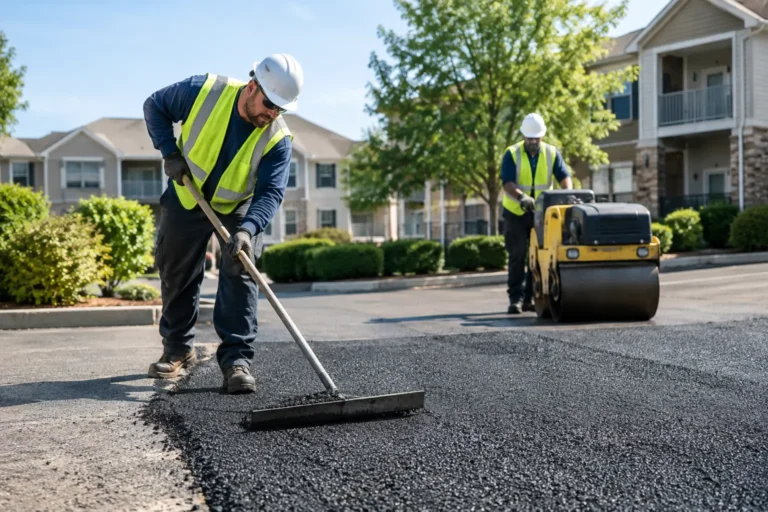
A resident trips near a sunken section of sidewalk. Water pools at the entrance after every heavy rain. A few parking spaces have cracked badly enough that owners begin asking when repairs will happen. This HOA pavement repair example shows how a board can move from scattered complaints to a clear, well-managed project that protects residents, controls costs, and improves the community’s appearance.
The goal is not to replace pavement simply because it looks old. A responsible pavement plan identifies the cause of damage, addresses safety concerns first, and selects a repair scope that makes financial sense for the association’s long-term budget.
An HOA Pavement Repair Example: From Complaints to a Clear Scope
Consider a 72-unit condominium community in South Florida with a 20-year-old asphalt parking area, concrete sidewalks, and several curbs around landscaped islands. The board initially receives complaints about cracks, uneven walking surfaces, and water standing near visitor parking after storms.
At first glance, the property appears to need a complete parking lot replacement. However, an on-site review reveals a more practical picture. Most of the asphalt remains stable, while the primary problems are concentrated in several areas: alligator cracking near the entrance, two low spots where drainage is poor, broken curb sections, and sidewalk panels lifted by nearby tree roots.
Instead of approving a large replacement without further review, the board requests a documented assessment and a defined scope of work. That decision changes the project from a costly reaction into a focused repair plan.
The recommended work includes removing and replacing failed asphalt in the damaged areas, correcting the base beneath the low spots, adjusting grades so water drains properly, repairing cracked curbs, and replacing the most hazardous sidewalk panels. After the localized repairs cure, the contractor applies crack sealing where appropriate and restripes the parking area.
This approach does not pretend the pavement is new. It does, however, address the conditions creating the most immediate risk and helps extend the useful life of the areas that are still structurally sound.
Why Pavement Problems Need More Than a Surface Fix
Cracks are often the visible symptom, not the whole problem. South Florida pavement is exposed to intense sun, heavy rain, standing water, vehicle traffic, irrigation overspray, and shifting soils. When water enters cracks, it can weaken the base material below the asphalt or concrete. Once the base loses support, the pavement may sink, crack further, or develop potholes.
In the example above, simply filling the low spots with asphalt would have made the surface look better for a short time. It would not have corrected the drainage issue or the weakened base beneath it. A dependable repair requires removal of failed material, preparation of a stable base, proper compaction, and new pavement installed at the right grade.
The same principle applies to sidewalks. A raised concrete panel may result from roots, settlement, or drainage conditions. Grinding can be a reasonable solution for a minor height difference, but it is not always the right answer. If the slab is badly cracked, moving, or no longer properly supported, replacement may provide a safer and longer-lasting result.
How the Board Built a Practical Repair Plan
The board begins by separating urgent safety work from maintenance work that can be scheduled later. This is especially useful when reserves are limited or when the community needs time to approve a larger capital expense.
First, the association identifies trip hazards, potholes, standing-water areas, and any pavement affecting emergency access or accessible parking. These items receive priority because delayed repairs can create resident safety concerns and greater property damage.
Next, the board documents each condition with photographs, location notes, and observations about when problems occur. For example, a low area that only holds water after a heavy storm may still be significant if it sits along a common walkway or in front of a building entrance. Clear documentation also helps the board explain the project to homeowners and compare contractor proposals fairly.
Finally, the association asks for a scope that distinguishes between repair, maintenance, and replacement. These terms should not be treated as interchangeable. Repair corrects isolated failed areas. Maintenance may include crack sealing, sealcoating, or restriping to protect pavement in fair condition. Replacement is appropriate when broad sections have failed and patching would only delay a larger problem.
The Scope Included More Than Asphalt
A strong proposal for this community addressed the entire affected area, not just the cracked surface. It included demolition and disposal of failed pavement, base repair where needed, asphalt or concrete placement, curb repairs, drainage adjustments, sidewalk work, and final striping.
The board also confirmed how the contractor would protect landscaped areas, direct vehicles during construction, maintain access for residents, and clean the site at the end of each workday. Those details matter. A repair project can be technically sound and still frustrate residents if access, scheduling, and communication are handled poorly.
Budget Decisions: Repair Now or Replace Later?
One of the most common HOA questions is whether it makes more sense to repair damaged areas or replace an entire parking lot. The honest answer depends on the pavement’s condition, expected remaining life, budget, drainage performance, and the cost of repeated patching.
In this example, localized repairs were the better near-term choice because the majority of the lot remained in good enough condition to justify preservation. The board avoided paying for full replacement years before it was necessary, while still correcting the areas most likely to worsen.
That said, repair is not always the lower-cost choice over time. If pavement has widespread alligator cracking, recurring potholes, extensive settlement, or drainage problems across the property, repeated patchwork can become an expensive cycle. In those cases, phased replacement or a full reconstruction plan may be more responsible.
A board should also consider timing. Completing repairs before the rainy season, or coordinating pavement work with drainage, roofing, exterior painting, or landscaping projects, can reduce disruptions and prevent newly completed work from being disturbed by another contractor.
Keeping Residents Informed During Construction
Even a well-planned pavement project affects daily routines. Parking may be temporarily restricted, entrances may need to be rerouted, and residents may need notice before sealcoating, striping, or concrete placement.
The community in this example provided a project notice before work began, followed by reminders identifying specific work zones and parking restrictions. The notice explained the reason for the repairs, the anticipated schedule, and who residents could contact with questions. It did not promise that every step would be unaffected by weather, because rain and site conditions can change a paving schedule.
Clear expectations help protect the contractor-resident relationship as well. Residents are more likely to cooperate when they understand that temporary inconvenience is connected to safer walkways, better drainage, and improved parking conditions.
What a Quality Pavement Repair Should Deliver
After the project, the community had level, properly patched pavement in the failed areas, improved drainage at the entrances, safer sidewalks, restored curb lines, and visible parking striping. The result was not just better curb appeal. It was a property that was easier and safer to use.
Quality work should also be easy for the board to verify. Before final acceptance, the association should walk the site with the contractor and review the completed areas. Look for standing water after appropriate conditions, uneven transitions, incomplete striping, damaged landscaping, debris, or areas that do not match the agreed scope. Any concerns should be documented and addressed before the project is closed.
For communities in Miami-Dade, Broward, and Palm Beach counties, local experience matters because pavement must perform through heat, rain, and frequent use. A capable contractor can help the board understand what needs immediate attention, what can be maintained, and what should be planned for future replacement.
The best HOA pavement repair project is not necessarily the largest one. It is the one built around honest assessment, sound preparation, safe access, and workmanship that gives the community confidence every time residents drive in or walk home.