
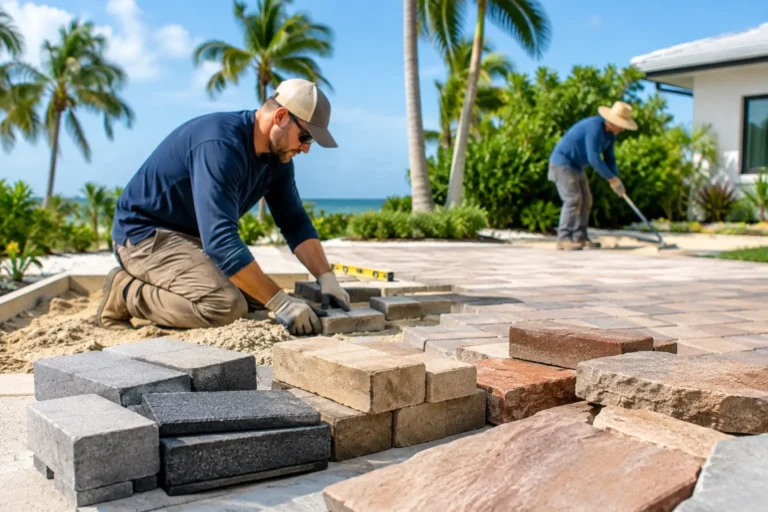
A new driveway or patio has to do more than look good on installation day. In South Florida, it must handle intense sun, sudden downpours, humidity, pool water, vehicle weight, and years of daily use. This paver material comparison explains where concrete, brick, natural stone, and porcelain pavers perform best – and where each option may require a different level of investment or maintenance.
The right answer depends on the space. A front driveway needs strength, stable installation, and a surface that complements the property. A pool deck needs comfort underfoot and dependable slip resistance. A commercial walkway may need a clean, consistent appearance that stands up to constant foot traffic. Choosing material first helps set the project up for long-lasting results.
Start With How the Space Will Be Used
Before comparing colors and patterns, consider the demands placed on the paved area. Passenger vehicles, delivery trucks, foot traffic, outdoor furniture, tree roots, drainage, and nearby pools all affect the best material and installation approach.
Drainage deserves special attention in Miami-Dade, Broward, and Palm Beach County properties. Even a high-quality paver can shift or settle when the base beneath it is not prepared correctly or water is allowed to collect. Proper grading, a compacted base, edge restraints, and appropriate joint material are just as important as the pavers themselves.
For most projects, the decision comes down to balancing appearance, budget, maintenance expectations, and the type of traffic the surface will carry.
Paver Material Comparison: Four Common Choices
Concrete Pavers: Versatile and Practical
Concrete pavers are a dependable choice for driveways, walkways, patios, and parking areas. They are manufactured in many shapes, colors, textures, and sizes, making it easier to create anything from a traditional brick pattern to a more contemporary large-format layout.
Their main advantage is flexibility. Individual units can be lifted and replaced if a repair is needed below the surface, which is useful around utilities or in areas that experience settlement. Concrete pavers also offer reliable load-bearing performance when installed over a properly engineered base.
The trade-off is that concrete can fade over time under strong UV exposure, especially in darker or more vibrant colors. Sealing can help protect the surface and enhance color, but it adds a maintenance task. For homeowners who want a broad range of design options and a durable surface at a manageable price point, concrete is often the most practical choice.
Brick Pavers: Traditional Character and Lasting Color
Brick pavers bring a classic appearance that works especially well with Mediterranean, historic, and traditional-style properties. Because their color is created from natural clay rather than a surface pigment, brick typically retains its rich tone well over time.
Brick is strong, durable, and well suited to walkways, patios, courtyards, and many residential driveways. Its smaller size creates more joints than larger pavers, which can add visual texture and help provide traction. A herringbone pattern is often selected for driveways because it distributes vehicle loads effectively.
However, brick has fewer color and shape options than concrete. It may also develop surface wear or staining in high-moisture areas if not maintained properly. Brick is an excellent fit when timeless curb appeal matters more than having unlimited design choices.
Natural Stone Pavers: Distinctive and High-End
Natural stone creates a look that manufactured products cannot duplicate exactly. Travertine, marble, limestone, and granite all offer natural variation in color and texture, giving patios, pool decks, and outdoor living areas a more custom appearance.
Travertine is especially popular around pools because many finishes stay relatively cool underfoot compared with darker, denser materials. Its natural texture can also provide good traction when selected and installed correctly. Stone can add significant visual value to a home, particularly when it coordinates with landscaping, coping, and exterior finishes.
The consideration is consistency and care. Natural stone varies from piece to piece, and some types are more porous than others. Certain stones benefit from sealing to help resist stains, moisture absorption, and weather exposure. Stone also requires careful material selection for driveways, since not every type or thickness is appropriate for repeated vehicle traffic. It is usually a higher-cost option, but for a feature patio or pool area, the result can justify the investment.
Porcelain Pavers: Clean Lines and Low Absorption
Porcelain pavers are a newer option for outdoor spaces and are valued for their refined appearance, low water absorption, and resistance to staining. They are available in finishes that resemble natural stone, wood, concrete, and other materials while maintaining a consistent color and pattern.
This material works well for patios, balconies, walkways, and poolside spaces where a sleek, modern finish is desired. Quality exterior-rated porcelain can resist fading, mold, and many common outdoor stains. It is also easy to clean, which appeals to busy property owners and commercial managers.
Porcelain is not automatically the right material for every driveway. Its suitability depends on the product thickness, rating, installation system, and expected vehicle loads. It can also cost more than standard concrete pavers, and precise installation is essential because the material is less forgiving when cut or handled improperly. For a modern outdoor living area, porcelain can be an excellent choice when the full installation is designed for it.
Appearance Matters, but Surface Performance Matters More
A material that looks right in a showroom may not perform the same way in direct sun, heavy rain, or a frequently used driveway. Light-colored pavers generally make pool decks and patios more comfortable during hot weather, while textured finishes can improve grip in wet areas.
For driveways and commercial paving, thickness and interlocking pattern are important. A properly designed paver system spreads loads across the base instead of relying on one large slab to carry the full force of each vehicle. That is why installation quality has a direct effect on durability, drainage, and appearance.
Joint sand also plays a role. It helps lock pavers together while allowing a segmented surface to move slightly with changing conditions. When joints are neglected or the base is compromised, pavers can loosen, shift, or allow weeds to emerge. Periodic cleaning, joint-sand renewal when needed, and prompt attention to drainage issues protect the investment.
How to Match Material to the Project
For a residential driveway, concrete pavers are often the strongest overall value because they offer design flexibility, serviceability, and dependable performance. Brick is a strong alternative for owners who prefer a classic style and lasting color.
For patios and outdoor entertaining areas, concrete, natural stone, and porcelain can all work well. The better choice depends on whether the priority is budget flexibility, natural character, or a clean modern finish. Around pools, travertine and certain textured porcelain products are often considered because comfort, drainage, and slip resistance are central concerns.
Commercial walkways and entry areas usually benefit from materials that offer a consistent appearance, reliable traction, and manageable maintenance. Concrete pavers are frequently selected for these conditions, while porcelain or natural stone may be appropriate for more design-focused entrances and amenity spaces.
Do Not Overlook the Installation
The best paver material cannot compensate for poor preparation. A dependable project begins with evaluating the existing surface, soil conditions, elevation, drainage path, and intended use. The crew should excavate to the proper depth, install and compact the base in layers, establish the correct slope, and secure the finished edges.
This planning is especially valuable when replacing cracked concrete, correcting water flow near a building, or connecting a new paved area to existing landscaping. It is also the point where a contractor can recommend a material that fits the property instead of simply selling the most expensive option.
Castellón Services Corp. approaches paving with the same focus applied to every construction project: clear communication, careful preparation, quality workmanship, and accountability from planning through completion. A well-chosen material and a properly built base can give your property a safer, more attractive surface that is ready for daily life and South Florida weather.