
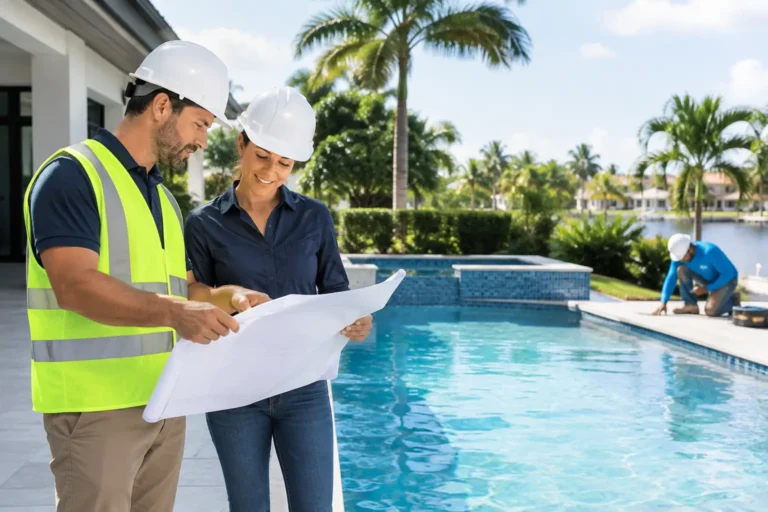
A pool project can look simple from the street: excavation, concrete, tile, water. Behind that finished backyard is a coordinated construction process involving site plans, safety requirements, utilities, inspections, and local approvals. Homeowners often bring us the same Miami-Dade pool permit questions because a missed detail early in planning can delay work later, add costs, or require changes to a design that was already approved.
The right approach is not to treat permitting as paperwork to handle at the end. It should shape the pool’s location, equipment layout, barrier plan, drainage, and construction schedule from the start.
Why a Pool Permit Is Required
A new in-ground pool is a structural, electrical, plumbing, and safety project. Permitting helps confirm that the work is designed and installed to protect the homeowner, neighbors, future occupants, and workers on site. The review commonly considers the pool shell, required setbacks, drainage, fencing or other barrier protections, electrical bonding, equipment placement, and access around the property.
Even a major pool renovation may need permits. Replacing a finish is different from changing the pool’s structure, moving equipment, adding a spa, installing a heater, altering electrical systems, or modifying a deck. The scope matters. Before assuming a repair is exempt, verify what the local building department requires for the specific work planned.
For properties in Miami-Dade County, the permitting authority may depend on where the property is located. Some municipalities administer their own building permits, while unincorporated areas fall under county processes. That difference can affect application forms, review steps, fees, inspection scheduling, and required supporting documents. A reliable contractor confirms the correct jurisdiction before plans are submitted.
Miami-Dade Pool Permit Questions About Plans and Property Lines
One of the first questions is, “Can the pool go where I want it?” The answer depends on the property’s layout and the rules that apply to that address. A homeowner may have an ideal location in mind, but the buildable area can be affected by rear and side setbacks, easements, utility lines, septic systems, drainage features, and existing structures.
A proper site plan is more than a sketch of a pool shape. It shows property lines, the home, proposed pool and deck areas, equipment location, setbacks, and relevant site conditions. Depending on the project, engineered pool drawings and additional trade plans may also be required. Clear, accurate plans reduce the risk of a reviewer requesting corrections that push the start date back.
Equipment placement deserves attention early. Pool pumps, filters, heaters, and related systems need workable service access and must be placed with consideration for local rules, noise, drainage, and nearby windows or property lines. Hiding equipment behind landscaping may look appealing, but it cannot come at the expense of access for maintenance or safe installation.
Do I Need a Survey?
In many cases, a current survey is a practical starting point and may be required as part of the permit package. It helps identify property boundaries, easements, and existing improvements. If the survey is outdated or does not show changes made since it was prepared, it may not provide enough information for design and review.
This is also where careful planning protects the investment. Moving a pool a few feet on paper is much easier than moving it after excavation has begun.
Safety Barriers, Electrical Work, and Drainage
Pool safety is central to permit review. Requirements can involve fences, walls, gates, latches, alarms, doors leading from the home to the pool area, and other protective measures. The exact solution depends on the property and the applicable code, but the goal is consistent: prevent unsupervised access to the water.
A beautiful new pool should not leave a safety gap in an otherwise secure backyard. Existing fencing may appear adequate but still need repairs, modifications, or a different gate arrangement to meet current requirements. Discuss the barrier plan before construction begins, especially if the project includes a new patio, outdoor kitchen, or major landscaping changes.
Electrical work is another area where quality and compliance matter. Pool systems require proper grounding and bonding, correctly installed electrical components, and safe separation from water. Lighting, heaters, automation controls, and pumps all add convenience, but each can add coordination to the project. Licensed, experienced professionals should handle this work rather than treating it as an afterthought.
Drainage is equally important in South Florida. A new pool deck changes how rainwater moves across the yard. The design should direct water responsibly and avoid creating drainage issues near the home, neighboring properties, or the pool equipment area. In some situations, existing site conditions call for additional drainage planning before concrete or pavers are installed.
What Happens After the Permit Is Submitted?
Permit review is rarely the last step before construction. If the building department requests revisions or additional documents, the plans need to be addressed before approval. This is normal, particularly for projects with challenging sites, older properties, additions to existing structures, or multiple trades involved.
Once the permit is issued, construction follows an inspection sequence. The exact order varies by scope and jurisdiction, but inspections often occur at key milestones such as layout, steel or reinforcement, plumbing, electrical, bonding, deck preparation, safety barriers, and final completion. Work should not be covered before the applicable inspection is complete. Doing so can create avoidable delays and may require portions of the work to be uncovered for verification.
Homeowners should expect inspections to affect the schedule. Weather, review volume, inspector availability, site readiness, and requested corrections can all influence timing. A contractor cannot responsibly promise that every inspection will occur on a specific day, but strong project management keeps the site prepared, communicates realistic expectations, and responds quickly when an issue needs attention.
Questions to Ask Before You Sign a Pool Contract
A good pool proposal should make responsibilities clear. Ask who is preparing the plans, who is submitting the permit application, which trades are included, and who will coordinate inspections. You should also understand whether the proposal includes the pool shell, deck, electrical work, equipment, safety barrier changes, drainage work, and finish selections.
It is wise to ask what could change the price or timeline. Unforeseen underground conditions, plan revisions, utility conflicts, owner-requested upgrades, and weather can affect a project. Straightforward communication about these possibilities is far better than a low initial price followed by unclear additions later.
You should also confirm how the contractor will protect the existing property. Pool construction can involve access through gates, removal of landscaping, staging of materials, dust, noise, and heavy equipment. A professional team plans the work area carefully and keeps the homeowner informed about what to expect at each phase.
When a Permit Question Needs a Site Visit
Online answers are helpful for general planning, but they cannot determine what will work on a particular property. A narrow side yard, a corner lot, a canal-adjacent property, a mature tree, an older electrical panel, or an existing patio can change the scope quickly. The most accurate answer comes from reviewing the site, the intended design, and the jurisdiction that will issue the permit.
That is why experienced planning matters as much as skilled construction. A contractor who coordinates the pool, concrete, electrical, paving, and related site work can help prevent the gaps that occur when each trade works from a different assumption.
A well-planned pool should feel exciting, not uncertain. Start with a clear site evaluation, complete plans, realistic scheduling, and a contractor willing to explain the process in plain language. Castellón Services Corp. approaches pool projects with that same focus on quality, safety, and dependable communication from the first conversation through final completion.