
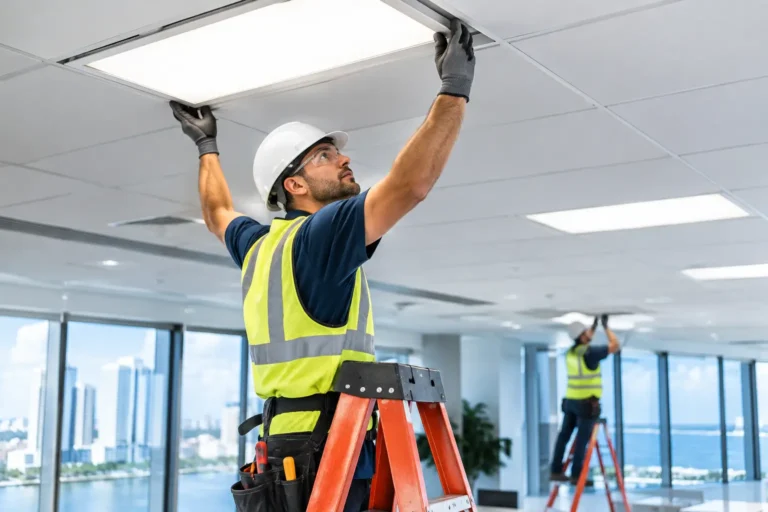
A commercial lighting installation Miami business can rely on starts with more than selecting bright fixtures. In a retail space, office, warehouse, restaurant, or exterior parking area, lighting affects safety, employee comfort, customer impressions, security, and operating costs every day. A poor layout can leave work areas dim, create glare at counters, or make an otherwise well-maintained property feel neglected after dark.
For South Florida property owners and managers, the right approach is to plan the system around how the space is actually used, then complete the electrical work with proper coordination, quality materials, and close attention to safety. The goal is practical: dependable light where people need it, without unnecessary energy use or disruptive rework later.
Start With the Work Happening in the Space
Lighting should support the purpose of each area, not follow a one-size-fits-all plan. An office may need even, comfortable illumination that reduces screen glare and supports focused work. A warehouse needs clear visibility along aisles, loading zones, storage racks, and pedestrian routes. A restaurant may require brighter lighting in kitchens and service areas while keeping the dining room welcoming.
Walk the property before choosing fixtures. Look at ceiling heights, wall colors, natural daylight, furniture or equipment placement, access routes, and the location of existing electrical circuits. This assessment often reveals problems that are easy to miss on a drawing, such as shadows behind shelving, dark building entrances, or lights positioned where displays, signs, or new partitions will block them.
The same principle applies outdoors. Parking lots, walkways, dumpster enclosures, loading areas, and building entrances need coverage that helps people see where they are going and discourages unwanted activity. More light is not always the answer. The best results come from placing the right fixtures at the right height and directing light where it serves the property.
Choose Fixtures for Performance, Not Just Appearance
LED lighting is a common choice for commercial projects because it uses less energy than older technologies and generally requires fewer lamp replacements. That can reduce maintenance interruptions in high ceilings, parking areas, and other locations where access takes time. But LED is a broad category, and fixture quality, color temperature, controls, and installation details all matter.
Color temperature influences how a room feels and how well people can identify details. Cooler white light may suit task-driven environments, while a warmer tone can be more comfortable in hospitality and customer-facing areas. In workplaces where accurate color recognition matters, the quality of the light should be considered along with brightness.
Durability matters in Miami’s heat, humidity, and frequent rain. Exterior fixtures should be selected for their exposure and mounting location, while interior fixtures in kitchens, garages, utility rooms, and other demanding areas may need added protection from moisture, dust, or impact. A lower initial fixture price can become expensive if it leads to premature failures, uneven color, or repeated service calls.
Plan Controls That Match Daily Operations
A well-designed lighting system should be easy for staff to use. Controls can make a meaningful difference in energy use and convenience, especially in larger properties or spaces with changing occupancy.
Occupancy sensors are often useful in restrooms, storage rooms, corridors, and back-of-house areas that are not occupied continuously. Daylight sensors can reduce artificial light near windows when daylight is sufficient. Timers and photocells help manage exterior lighting so entrances and parking areas are lit when needed without relying on someone to remember a switch.
The trade-off is complexity. Advanced controls can save energy, but only when they are programmed properly and make sense for the people using the building. For example, an aggressive sensor setting in a conference room or a busy hallway can be frustrating. Controls should be tested after installation and adjusted to the actual rhythm of the business.
Address Electrical Capacity Before Installation
Adding fixtures, upgrading older lighting, or changing the layout of a commercial space can affect the electrical system. Existing panels, circuits, wiring condition, and available capacity should be evaluated before work begins. This is especially important in older buildings where previous renovations may have added loads over time.
An electrical contractor can determine whether the project requires new circuits, panel modifications, emergency lighting, exit signs, or a more comprehensive upgrade. Taking this step early helps avoid a common project delay: selecting fixtures and finalizing a ceiling plan before discovering that the electrical infrastructure needs additional work.
Code and permit requirements also need to be part of the plan. Requirements vary based on the property type, scope of work, occupancy, and local jurisdiction. Commercial projects in Miami-Dade and surrounding South Florida communities may also require coordination with building management, inspectors, or other trades. Professional planning keeps these requirements from becoming last-minute obstacles.
Coordinate Lighting With Remodeling and Other Trades
Lighting installation is rarely isolated from the rest of a commercial improvement project. Ceiling repairs, new drywall, painting, HVAC changes, signage, fire protection systems, flooring, and millwork can all affect where fixtures and controls belong.
Coordination protects the schedule and the finished appearance. It is far easier to run wiring and establish fixture locations before ceilings are closed than to cut into completed surfaces later. It also helps prevent conflicts, such as a new light landing too close to an air diffuser, sprinkler head, access panel, or decorative ceiling feature.
For property managers overseeing multiple improvements, working with a contractor that can coordinate electrical work alongside remodeling, concrete, paving, and broader property needs can simplify communication. Instead of chasing separate schedules, the project has clearer accountability from planning through final completion.
Do Not Overlook Emergency and Exterior Lighting
General lighting makes a property functional. Emergency lighting and illuminated exit signage help people leave safely when normal power is interrupted. These systems require proper placement, reliable backup power, and testing so they perform when needed rather than merely appearing complete during installation.
Exterior lighting deserves equal attention. A bright entrance, visible address signage, well-lit pathways, and properly covered parking areas can improve both safety and curb appeal. At the same time, fixtures should be aimed carefully to limit glare for drivers, neighbors, and nearby residences. Lighting that causes discomfort or spills into the wrong area does not improve the customer experience.
Regular maintenance is part of the long-term plan. Dirt, damaged lenses, corrosion, water intrusion, and failed drivers can reduce output over time. Periodic inspections allow small issues to be handled before a dark entrance or poorly lit walkway becomes a safety concern.
Build the Project Around a Clear Scope and Schedule
Before installation begins, a commercial lighting scope should identify the fixture types, locations, control approach, electrical work, access requirements, permitting responsibilities, and expected schedule. If the property must remain open, the contractor should also plan around customers, employees, deliveries, noise limits, and work hours.
Phased installation can be the better choice for an active office, retail location, restaurant, or occupied multifamily property. It may take more coordination, but it can keep essential areas operating while improvements are completed in sections. For vacant spaces or major renovations, a faster full-site installation may be more efficient.
Clear communication matters as much as the equipment. Property owners should know what will happen, when crews will be on site, and how temporary disruptions will be handled. Any changes discovered in the field should be discussed promptly, with practical options and transparent expectations.
A Better Light for the Way Your Property Works
Commercial lighting should make daily operations safer, more efficient, and easier to manage. It should help employees perform their work, help customers feel comfortable, and help a property present itself with care after sunset. The right design is not necessarily the most expensive or the most elaborate. It is the one that fits the building, the business, and the people who depend on it.
Castellón Services Corp. approaches commercial electrical and improvement work with the same focus: careful planning, dependable workmanship, and straightforward communication. Whether the need is a targeted lighting upgrade or part of a larger renovation, a clear project plan gives your property a stronger result from the first fixture to the final inspection.