
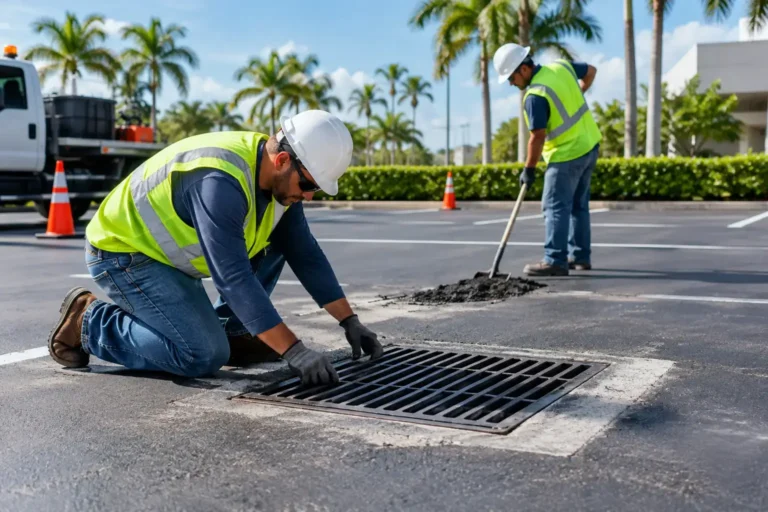
A parking lot can look newly paved and still fail during the first hard afternoon storm. Water that pools at entrances, along wheel stops, or beside buildings creates more than an inconvenience. It can damage asphalt, create slip hazards, disrupt customer access, and lead to costly repairs. The best parking lot drainage is planned as part of the entire paved area, directing water away from traffic lanes, structures, and vulnerable pavement edges before it has a chance to cause problems.
For commercial properties in South Florida, drainage deserves attention from the start of a paving project. Heavy rain, high groundwater conditions, flat sites, and frequent vehicle traffic put added pressure on parking surfaces. A dependable system combines the right slope, drainage structures, pavement details, and ongoing maintenance.
What Makes the Best Parking Lot Drainage Work
Effective drainage is not one drain placed at the lowest visible point. It is a coordinated plan that controls where rainwater travels from the moment it lands on the pavement. The surface must slope consistently, drains must be positioned where water naturally collects, and the system must have a clear route to an approved discharge point or stormwater system.
The right design depends on the property. A small office lot, a retail center, an apartment community, and an industrial facility may all need different approaches. Site elevation, soil conditions, existing utilities, local requirements, nearby buildings, landscaping, and the amount of impervious surface all affect the solution.
A well-built drainage plan should keep water moving without creating a steep or uncomfortable driving surface. It should also protect the pavement structure below. When water reaches the base and subgrade beneath asphalt or concrete, it can weaken the support that keeps the surface stable under vehicle loads.
Surface Slope Comes First
Grading is the foundation of parking lot drainage. Before paving begins, the base should be shaped so the finished surface guides water toward catch basins, trench drains, swales, or other collection points. If the lot is flat or has inconsistent grades, standing water is likely even when drains are present.
A practical parking lot slope is subtle enough for safe driving and accessible routes but sufficient to prevent ponding. The exact grade should be determined for the site, especially near building entrances, loading areas, and accessible parking spaces. Water should never be directed toward doors, storefronts, electrical equipment, or neighboring property.
Poor grading often reveals itself in familiar ways: puddles that remain long after a storm, water flowing across sidewalks, crumbling asphalt at the edge of the lot, or tire tracks that carry water toward the building. Correcting these issues may require more than patching. In some cases, the pavement needs regrading or reconstruction to solve the cause rather than repeatedly treating the symptom.
The Right Drainage Structures for the Site
Catch basins are common in larger parking areas because they collect runoff at low points and direct it through underground piping. They can be highly effective when sized correctly and installed with proper elevations. Their grates should sit flush with the finished pavement so water enters easily without creating a trip point or damaging vehicles.
Trench drains are often useful where water crosses a concentrated path, such as in front of garage entries, loading docks, ramps, drive-through lanes, or building thresholds. Because they collect water along a continuous channel, they can control runoff where a single basin may not be enough.
Swales and landscaped drainage areas can also help manage runoff, particularly along the perimeter of a property. They can slow water and provide a designated path away from pavement. However, they need adequate space, proper grading, and maintenance. A swale that fills with sediment or is altered by landscaping may stop functioning as intended.
Some sites also require retention or detention features to manage stormwater volume. These systems are more involved and should be planned carefully around local regulations, soil conditions, and the property’s overall drainage path. The objective is not simply to move water faster. It is to manage it responsibly without shifting flooding problems elsewhere.
Why Pavement Edges Need Drainage Protection
Parking lot damage often starts at the edges. Water enters through cracks, flows under the asphalt, and softens the base material. As vehicles travel close to the edge, the unsupported pavement can crack, unravel, or break away. This is especially common near curbs, islands, drainage inlets, and low spots.
Curbing can help contain runoff and guide it toward drains, but it must be paired with properly placed openings and collection points. A curb that traps water in a low area can make ponding worse. Likewise, asphalt should be compacted and finished properly around drain structures to avoid separations that let water seep below the surface.
Concrete pavement has different strengths, but it is not immune to drainage problems. Water can enter joints, wash out supporting material, and contribute to settlement or cracking. Whether a lot is asphalt, concrete, or a combination of both, drainage and pavement condition should be evaluated together.
Drainage Details That Protect Customers and Operations
A flooded parking space or entrance can discourage visitors before they reach the door. For businesses, that can mean lost traffic, complaints, and avoidable liability concerns. For multifamily properties, standing water can create daily frustration for residents and guests. Clear, dry travel paths support safer access for everyone using the property.
Drainage is particularly important around pedestrian areas. Sidewalks, crosswalks, accessible routes, curb ramps, and building entrances need careful grading so water does not collect where people walk. The solution must also maintain required slopes and transitions for accessibility. This is one reason parking lot drainage should be handled as a coordinated construction scope, not an afterthought after paving is complete.
Loading zones and dumpster pads deserve the same attention. These areas receive heavy loads and may be washed frequently, adding more water to the surface. If runoff has nowhere to go, the pavement can deteriorate quickly. Purposeful slopes and durable drainage features help keep these service areas functional.
Common Drainage Mistakes to Avoid
The most expensive drainage problems usually begin with a shortcut during design, preparation, or maintenance. Property owners should be cautious when a proposed paving repair focuses only on the visible asphalt damage without identifying why the area failed.
Watch for these common issues:
- Adding a drain without correcting the surrounding pavement slope.
- Paving over low spots and leaving water with no clear outlet.
- Connecting runoff to an inadequate or improperly maintained drainage system.
- Allowing leaves, sediment, trash, and landscaping debris to block grates and basins.
- Repairing cracks and potholes while ignoring water entering the base below.
- Directing runoff toward building walls, adjacent properties, or pedestrian paths.
Each problem can appear minor at first. Over time, however, standing water accelerates oxidation, cracking, raveling, potholes, and base failure. The cost of regular cleaning and timely repairs is usually far lower than replacing a large section of failed pavement.
Maintenance Is Part of the Drainage System
Even the best-designed drainage system needs routine attention. Catch basins collect sediment. Grates become blocked. Tree roots, shifting soils, and pavement settlement can change how water flows across the lot. After major storms, a quick inspection can identify issues before they affect daily operations.
Property managers should look for water that remains after normal drying time, debris around drains, erosion near pavement edges, cracked areas surrounding catch basins, and signs that water is reaching the building. Cleaning inlets and removing debris should be routine, especially before the rainy season. If ponding continues after cleaning, the issue may be a grade, pipe, or structural problem that needs professional evaluation.
When resurfacing or repairing a parking lot, it is also a good time to inspect drainage elevations. An overlay can change the relationship between pavement and drain grates. If the work raises the surface without adjusting the structures, water may no longer enter the drains effectively.
Choose a Contractor Who Looks Beyond the Surface
A dependable parking lot project starts with an honest assessment of the whole site. The contractor should evaluate pavement condition, drainage paths, low areas, existing structures, and the practical needs of vehicles and pedestrians. Clear communication matters because the right solution may be a targeted drain repair, localized regrading, a new collection system, or a larger reconstruction plan.
For property owners throughout South Florida, Castellón Services Corp. provides paving and civil work with attention to drainage, safety, and long-term performance. The goal is straightforward: build a parking area that looks professional, supports daily traffic, and stays prepared when heavy rain arrives.
Water will always find the lowest point. A properly planned parking lot makes sure that point is where it belongs.