
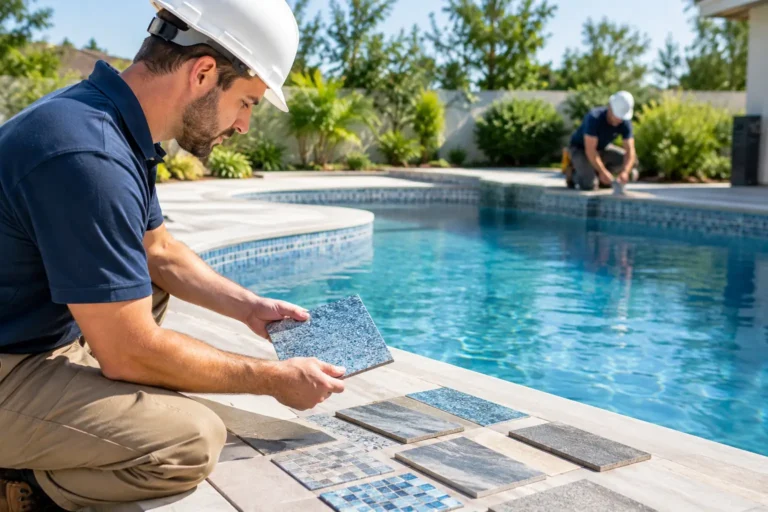
A new pool shell is only part of the finished picture. The surface you see and feel every day affects water color, comfort underfoot, cleaning needs, and how well the pool stands up to years of South Florida sun, rain, and pool use. Choosing pool finishes should be a practical decision as much as a design decision. The right material should fit the way your family uses the pool, the look of the property, and the level of upkeep you are comfortable handling.
For homeowners planning a custom pool or updating an aging surface, it helps to look beyond color samples. A finish can look excellent on a small display board and behave very differently across a full pool, especially once water depth, sunlight, landscaping, and interior lighting come into play.
What Pool Finishes Do for Your Pool
A pool finish is the interior surface applied over the pool structure. It creates the final appearance of the water while providing a durable barrier that protects the underlying shell. Depending on the material selected, it can create a clean blue appearance, a deeper lagoon-style color, a reflective finish, or a more natural textured look.
The finish also influences daily use. Some surfaces feel smoother on bare feet. Others offer more grip but can feel slightly more textured. Certain options handle staining and chemical exposure better than others, while some require a more careful water-balance routine to maintain their appearance.
There is no single best choice for every property. A pool used mainly for quiet relaxation may call for a different surface than one used daily by children, guests, or tenants. Budget, renovation timing, and the condition of the existing pool all matter as well.
The Main Types of Pool Finishes
Standard plaster
Traditional white plaster remains a familiar and cost-effective option. It is typically made from cement, water, marble aggregate, and other materials that create a smooth, classic surface. White plaster often gives pool water a light, clean blue tone, particularly in direct sunlight.
This finish can be a strong fit when keeping initial project costs under control is a priority. It also works well with many pool styles, from simple rectangular designs to more detailed custom shapes. However, plaster generally has a shorter service life than aggregate or tile finishes, and it is more sensitive to poor water chemistry. Discoloration, etching, mottling, and staining can become concerns if the pool is not maintained consistently.
Quartz aggregate
Quartz finishes combine plaster with colored quartz aggregate. They add strength, more color options, and a more durable surface than standard plaster. Homeowners often choose quartz when they want a noticeable upgrade in appearance and performance without moving into the higher cost range of a pebble or full-tile interior.
Quartz can provide a more even, attractive finish over time, though it still requires balanced water chemistry and professional installation. Its texture is usually modest, but the final feel can vary by product and application. Reviewing a physical sample and discussing the expected texture before work begins can prevent surprises.
Pebble aggregate
Pebble finishes use small natural stones or polished aggregates embedded in the surface. They are valued for their long life, rich water color, and resistance to everyday wear. Darker pebble blends can create a deep blue or tropical green appearance, while lighter blends can keep the water looking brighter and more open.
This option is often chosen for custom pools because it gives the interior more visual depth than a standard plaster finish. It is also well suited to pools that receive frequent use. The trade-off is cost and texture. Pebble is generally more expensive than plaster or quartz, and some blends feel more textured underfoot. Polished pebble options can offer a smoother feel, but they may come at a higher price point.
Glass bead and specialty aggregate
Glass bead finishes and other specialty aggregate options add reflective detail that can make the water shimmer in sunlight or under pool lights. They are often selected for high-end custom designs where color movement and visual impact are major priorities.
These finishes can be beautiful, but they require skilled installation and a budget that accounts for premium materials. The right choice depends on whether that added visual effect will remain meaningful to you after the pool has become part of everyday life. For many properties, quartz or pebble delivers an excellent balance of appearance and long-term value.
Tile
Tile is the most premium pool interior option and can be used across the entire pool or as an accent at the waterline, steps, benches, and spa areas. Porcelain, ceramic, and glass tile offer extensive color and pattern choices. They can create a polished, custom result that holds its color well over time.
A full-tile pool interior is highly durable when installed correctly, but it requires a larger upfront investment. It also involves more labor and careful preparation. Tile repairs may be localized if damage occurs, yet maintaining grout lines and addressing any movement-related issues should be part of the long-term plan.
Choosing a Color That Works in Real Conditions
Pool water does not take its final color from the finish alone. Water depth, sun angle, surrounding pavers, trees, house colors, and even the sky can influence what you see. A finish that looks medium blue in a showroom sample may appear darker in a deep pool or greener near heavy landscaping.
Lighter finishes generally produce brighter, clearer blue water and make the bottom easier to see. They can be a practical choice for families who want a clean, open appearance. Darker finishes create drama and can make a pool feel deeper or more reflective, but they may show mineral deposits or fading more noticeably in some conditions.
Before making a final color selection, look at completed pools with similar finishes when possible. Ask to see them at different times of day. It is also smart to consider how the finish will work with decking, coping, outdoor kitchens, and the overall architecture of the property rather than selecting it as an isolated feature.
Durability Depends on More Than the Material
Even high-quality pool finishes need the right installation and maintenance to perform well. Surface preparation, application conditions, curing procedures, and startup care all have a direct effect on the life of the finish. Rushing any of these steps can lead to problems that no material choice alone can solve.
Water chemistry is equally important. Low pH, aggressive water, high calcium levels, and prolonged imbalance can damage plaster and aggregate surfaces. Stains may come from metals, leaves, organic debris, or poor chemical management. A dependable pool service routine protects the appearance of the finish and helps identify small concerns before they become costly repairs.
For a renovation, the existing shell should be evaluated carefully before a new finish is applied. Cracks, hollow areas, bond issues, waterline damage, or aging plumbing may need attention first. Applying a beautiful new surface over unresolved problems can shorten the life of the investment.
Cost, Value, and the Right Level of Upgrade
Standard plaster usually has the lowest initial cost, while quartz sits in the middle range. Pebble and specialty aggregate finishes cost more upfront but may provide longer service life and a more distinctive appearance. Full tile is typically the highest-cost option because of material and installation labor.
The lowest bid is not always the best value. A pool finish should be priced with the full scope in mind, including surface preparation, repairs, drainage considerations, tile work, startup procedures, and warranty expectations. Clear communication about what is included helps property owners compare proposals fairly.
For many homeowners, the best decision is to invest in the most durable finish that fits the project budget without sacrificing needed repairs or proper installation. A slightly less elaborate surface applied correctly will usually serve the pool better than a premium material installed with shortcuts.
Planning a Pool Finish Project With Confidence
A successful finish project begins with a clear conversation about your pool’s age, condition, use, design goals, and budget. Bring photos of colors or styles you like, but remain open to recommendations based on the pool’s shape, depth, and exposure to sun. The most attractive option on paper may not be the best fit for the property.
At Castellón Services Corp., careful planning and dependable workmanship are central to every custom pool project. Whether you are building a new pool or refreshing an existing one, selecting the finish early helps coordinate tile, coping, deck materials, lighting, and surrounding improvements into one finished design.
The finish you choose will become the backdrop for every swim, weekend gathering, and quiet evening by the water. Give it the same attention you would give any major part of your property, and choose a surface that delivers the comfort, durability, and appearance you will be glad to live with for years.