
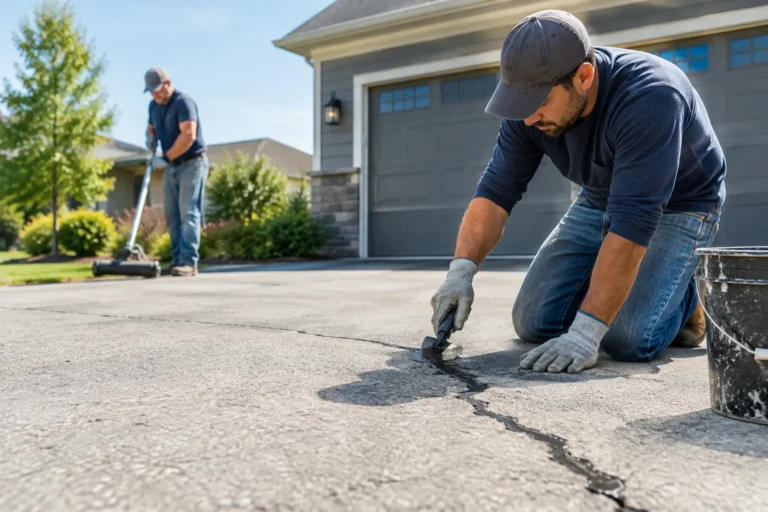
A thin line across a driveway may look like a small cosmetic issue, but driveway cracks can also be an early warning that water, ground movement, or failing materials are affecting the surface below. Addressing them at the right time protects curb appeal, reduces trip hazards, and can prevent a manageable repair from becoming a larger paving project.
For homeowners and commercial property managers, the right solution depends less on the presence of a crack and more on its pattern, width, location, and cause. A professional evaluation helps separate normal surface wear from damage that calls for more substantial work.
What Driveway Cracks Are Telling You
Concrete and asphalt are durable paving materials, but neither is immune to weather, traffic, settling, and moisture. South Florida’s heat, heavy rain, high humidity, and periods of intense sun create demanding conditions for driveways. Water can enter small openings, weaken the base beneath the pavement, and widen damage over time.
Not every crack means the driveway has failed. Concrete naturally moves as temperatures change, and properly placed control joints are designed to direct that movement. The concern begins when cracking appears outside those joints, spreads across multiple areas, develops uneven edges, or is accompanied by sinking and standing water.
The goal is not simply to cover the visible opening. Lasting work starts by identifying why the pavement cracked in the first place. If drainage, soil movement, or an unstable base is left unaddressed, a surface-level patch may only provide a short-term improvement.
Common causes of cracking
Age is one of the most common factors. Over years of sun exposure, rain, vehicle traffic, and normal settling, paving materials lose some flexibility and strength. A driveway that was installed with an inadequate base or poor drainage may show problems much sooner.
Water is another major concern. Rainwater that pools along the edge of a driveway or flows beneath it can wash away supporting soil and create voids. When vehicles pass over unsupported sections, the slab or asphalt surface can crack, sink, or break apart.
Heavy loads can also cause damage. A residential driveway designed for passenger vehicles may not hold up well under repeated use by large trucks, dumpsters, delivery vehicles, or construction equipment. Tree roots, nearby excavation, and ground settlement can create similar pressure from below.
Types of Driveway Cracks and What They Mean
The appearance of a crack provides useful clues, although a site inspection is the best way to confirm the cause. Hairline cracks are narrow, shallow openings that may be related to normal curing, minor movement, or surface aging. If they remain stable and the surrounding pavement is level, sealing them can often help keep moisture out.
Straight cracks that run from one edge of the driveway to another may result from normal expansion and contraction, especially in concrete. They deserve attention when they become wide, collect water, or develop a height difference between the two sides.
Cracks that form a rough grid or resemble an alligator pattern are more serious in asphalt. This pattern often indicates that the base beneath the surface is weak. Filling each individual opening without rebuilding the failed area usually will not solve the underlying problem.
Cracks with one side higher than the other can create a trip hazard and often point to settlement, root pressure, or movement below the slab. Similarly, cracks around sunken areas, potholes, crumbling edges, or persistent puddles should be evaluated as part of a broader drainage and paving issue.
When a Driveway Crack Repair Makes Sense
Repair is often the practical choice when damage is limited, the driveway base remains stable, and water is draining as it should. A timely repair can improve the appearance of the pavement while slowing additional deterioration.
For narrow, stable cracks, a contractor may clean the opening, remove loose material, and apply an appropriate crack filler or sealant. The material must be selected for the driveway surface and the expected movement. Concrete and asphalt require different repair methods, and using the wrong product can lead to premature failure.
Small localized areas of asphalt deterioration may be repaired with patching, provided the affected base is still sound. Concrete repairs may involve filling, patching, or addressing a damaged section when the problem is contained. Color and texture may not match perfectly after a concrete repair, particularly on older surfaces, but a well-executed repair can restore safety and function.
Repair is usually worth considering when:
- Cracks are narrow and have not widened significantly over time.
- The pavement remains level, without rocking, sinking, or raised edges.
- There are no widespread alligator cracks, potholes, or crumbling sections.
- Water drains away from the driveway rather than pooling or flowing underneath it.
A repair can be a smart investment, but it should be viewed realistically. It extends service life when the structure below the pavement is in good condition. It cannot correct a driveway that is failing from the base upward.
When Driveway Cracks Point to Replacement
Replacement becomes the better value when cracking is widespread, the surface has shifted, or the base has deteriorated. Repeated patching may cost less at first, but it can become frustrating and expensive when new damage returns every rainy season or after routine vehicle use.
For concrete driveways, replacement may be appropriate when multiple slabs have settled, cracks have substantial vertical separation, or the surface is extensively spalled and broken. Removing and replacing affected sections allows the contractor to inspect and correct the supporting base, establish proper slope, and create a more dependable finished surface.
For asphalt driveways, severe alligator cracking, recurring potholes, and soft areas often indicate deeper structural problems. In some cases, milling and resurfacing may be an option. However, resurfacing over an unstable base is rarely a lasting solution. Full-depth repair or replacement is often necessary in failed sections.
Replacement also provides an opportunity to improve the driveway’s layout and performance. A property owner may choose to correct drainage, widen a tight parking area, improve transitions to the street or garage, or select a finish that better complements the property. The appropriate scope depends on the condition of the existing pavement and how the space is used.
Do Not Ignore Drainage Around the Driveway
A driveway should move water away from structures and avoid creating standing water along walking paths, garage entries, or pavement edges. When a crack repeatedly fills with water after rainfall, it is worth looking beyond the crack itself.
The solution may involve adjusting the driveway slope, repairing adjacent pavement, improving runoff paths, or addressing erosion at the edges. On commercial properties, drainage issues can affect pedestrian safety, parking access, and the long-term condition of larger paved areas. A complete assessment considers the driveway, surrounding grades, nearby landscaping, and the direction water takes during a heavy storm.
This is one reason experienced paving crews matter. The finished surface may look simple, but the preparation beneath it determines whether it performs well over time. Proper base work, compaction, reinforcement where appropriate, joint planning, and drainage are essential to dependable results.
How to Protect a Repaired or New Driveway
Regular observation is one of the most effective forms of maintenance. After heavy rain, check where water collects and whether it drains within a reasonable time. Keep driveway edges clear of soil buildup and landscaping that can trap moisture against the pavement.
Avoid placing unusually heavy vehicles or equipment on areas not designed for that load. If you notice a small crack, take a photo and monitor it over several months. A stable hairline crack may only need sealing, while one that grows quickly or develops uneven sides should be inspected sooner.
For asphalt, periodic sealing may help protect the surface from sun, water, and vehicle fluids when the pavement is otherwise in good condition. Concrete needs different care. It benefits from keeping joints clear, managing drainage, and repairing developing damage before water reaches the base.
Choose a Repair Plan Based on the Cause
The best answer to driveway damage is rarely a one-size-fits-all patch. A clear assessment should explain what caused the cracking, what work is recommended, what alternatives exist, and what the expected result will be. That communication helps property owners make practical decisions based on safety, appearance, budget, and long-term performance.
Castellón Services Corp. approaches paving and concrete work with attention to the full condition of the site, not just the most visible damage. For properties in Miami-Dade, Broward, and Palm Beach counties, that means considering how intense rain, heat, traffic, and drainage affect the driveway over time.
If a crack is growing, holding water, or creating an uneven surface, addressing it now can protect more than the pavement. A thoughtful repair or replacement plan gives your property a safer entrance, a cleaner appearance, and a surface built to perform when it matters.