
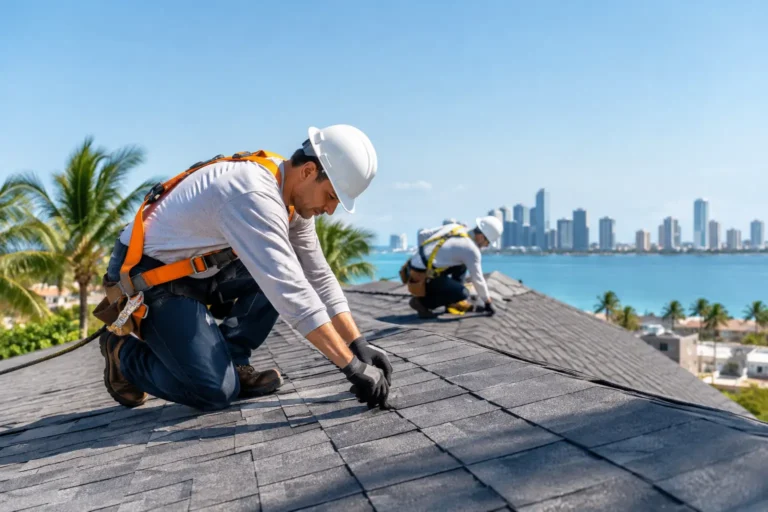
A roof can look acceptable from the driveway while hidden moisture, weakened decking, or failing flashing is already putting the property at risk. For homeowners and building owners, understanding roof replacement cost Miami pricing starts with looking beyond a single number. The right estimate accounts for the roof system, local code requirements, existing conditions, and the level of protection the building needs during South Florida’s heat, rain, and hurricane season.
A lower proposal is not always a lower total cost. If it leaves out permit fees, disposal, underlayment, flashing, deck repairs, or required wind-resistance details, those items can surface later as change orders. A detailed scope gives you a clearer path to a durable roof and a more predictable project.
What Does Roof Replacement Cost in Miami?
Most roof replacement projects are priced by the square foot of roof surface, not simply by the building’s interior square footage. A 2,000-square-foot home may have considerably more than 2,000 square feet of roofing once overhangs, slopes, hips, valleys, and garage areas are included.
As a broad planning range, an asphalt shingle roof may cost roughly $4 to $8 per square foot installed, while tile and metal systems often cost more. Tile roofing may range from about $9 to $18 or more per square foot, and metal can range from approximately $10 to $20 or more depending on the panel type, finish, roof complexity, and required components. Flat and low-slope commercial roofing costs vary widely based on the membrane system, insulation, drainage conditions, and whether the existing roof can be removed or recovered.
These figures are useful for early budgeting, not as a final quote. A straightforward single-story shingle roof with good access is very different from a multi-level tile roof with damaged decking, limited staging space, and multiple roof penetrations. The only reliable price comes after a qualified contractor inspects the property and prepares a defined scope of work.
The Factors That Shape Your Roof Replacement Price
Roof size, shape, and accessibility
A larger roof requires more material and labor, but size is only part of the equation. Roofs with steep slopes, multiple elevations, dormers, skylights, chimneys, valleys, and detailed transitions take longer to work on safely and accurately. Each change in direction creates an area that needs careful waterproofing.
Access matters as well. A property with clear driveway access and room for material delivery is generally simpler to manage than one with narrow side yards, landscaping to protect, or limited space for debris containers. For commercial properties, coordinating deliveries and work zones around customers, tenants, or operations can also affect the project plan.
Roofing material and system design
The material you choose has a major effect on upfront cost, appearance, maintenance needs, and expected service life. Asphalt shingles are often the most economical option and can provide dependable protection when installed as a complete, code-compliant system. They are a practical fit for many residential properties.
Concrete or clay tile delivers a distinctive South Florida appearance and long-term durability, but it adds weight and requires careful installation. Before installing or replacing tile, the structure and roof assembly should be evaluated for the appropriate system. Tile repairs can sometimes be possible, but widespread cracked, loose, or aging tile may make replacement the more responsible investment.
Metal roofing generally carries a higher initial price, yet it can offer excellent longevity, strong wind performance when properly specified, and a clean architectural look. The choice between shingle, tile, metal, or a low-slope membrane should be based on the building, budget, maintenance expectations, and long-term plans for the property.
Tear-off, disposal, and hidden conditions
Removing the existing roof is usually part of a full replacement. The number of existing layers, the material being removed, and disposal requirements all influence labor and hauling costs. Tile removal, for example, is more labor-intensive than removing many shingle systems.
Once the old material comes off, the roof deck is exposed. This is when contractors may find deteriorated plywood, water-stained sheathing, damaged fascia, or framing concerns that were not visible during the initial inspection. Replacing compromised decking is not an optional cosmetic upgrade. It is necessary to create a secure base for the new roof system.
A professional estimate should explain how concealed damage is handled. It may include an allowance for a limited amount of deck repair or identify repairs as an additional cost if discovered. Clear communication at this stage protects both the property owner and the contractor from surprises.
Miami-Dade permits and wind requirements
Roofing in Miami-Dade County involves more than selecting a color and material. Local permitting, inspections, and high-wind requirements are significant parts of the job. Roofing products and assemblies must be appropriate for the building and approved for their intended use, while installation details must meet applicable code requirements.
The roof’s underlayment, fastening pattern, flashing, edge metal, ventilation, and attachment methods all matter. These components may not be as visible as the finished roof covering, but they play a central role in helping control water intrusion and wind uplift. A proposal that clearly identifies the complete roofing system is more valuable than one that only names the surface material.
Permit fees and inspection coordination should be discussed before work begins. They are legitimate project costs, and proper permitting provides an important record that the work was completed through the required process.
Flashing, drainage, and roof penetrations
Leaks frequently begin at transitions, not in the center of a roof field. Pipes, vents, skylights, chimneys, wall intersections, air-conditioning curbs, and drainage points require precise flashing and sealing. If these details are worn or incorrectly installed, replacing only the visible roof material may not solve the underlying problem.
On low-slope roofs, drainage deserves particular attention. Ponding water can accelerate material deterioration and expose weak points in the roof assembly. Correcting drainage may involve adjusting slope, repairing drains, or addressing scuppers and gutters. Those improvements can add to the initial scope but may prevent repeated repair costs later.
How to Compare Roof Replacement Estimates
When comparing estimates, place the scopes side by side instead of focusing only on the bottom line. One contractor may include tear-off, permit handling, underlayment, flashing, disposal, protection for landscaping, and cleanup, while another may list a basic installation price with key work left out.
Ask whether the proposal identifies the roofing material, underlayment, flashing details, ventilation approach, deck repair process, permit responsibility, warranty information, and expected schedule. You should also know who will supervise the work and how the crew will protect the property while materials and debris are being managed.
For commercial owners and property managers, the scope should also address site safety, tenant access, staging, work hours, and how the contractor will respond if weather interrupts the schedule. A roof replacement should be coordinated around the property’s operations whenever possible, not treated as an isolated task.
When Repair May Cost Less Than Replacement
Not every roofing concern requires a full replacement. A localized leak caused by damaged flashing, a few missing shingles, a minor penetration issue, or limited storm damage may be repairable if the overall roof is still in sound condition. Timely repairs can extend service life and protect the interior from further damage.
Replacement becomes the stronger option when repairs are recurring, the roof has widespread deterioration, moisture has affected the deck, or the current system is near the end of its useful life. It can also make sense when owners want to improve wind resistance, change materials, or avoid the ongoing cost and disruption of repeated service calls.
An honest inspection should separate immediate needs from optional upgrades. That gives you the ability to make a decision based on the roof’s actual condition rather than pressure or guesswork.
Plan for Value, Not Just the Initial Price
A roof is one of the building’s primary protective systems. The best project balances cost with correct installation, quality materials, code compliance, jobsite safety, and a contractor who remains accountable through completion. For properties that also need concrete, exterior repairs, electrical work, or renovation coordination, working with an experienced full-service contractor such as Castellón Services Corp. can simplify planning and communication.
Before committing to a replacement, request a detailed inspection and written scope that explains what is included, what may change if concealed damage is found, and how the completed roof will protect your property. That clarity is the most practical first step toward a roof investment that performs when South Florida weather puts it to the test.